
Most Holy Body and Blood of Christ (Corpus Christi)
The Solemnity of the Most Holy Body and Blood of Christ, known as Corpus Christi, honors the real presence of Jesus in the Eucharist.
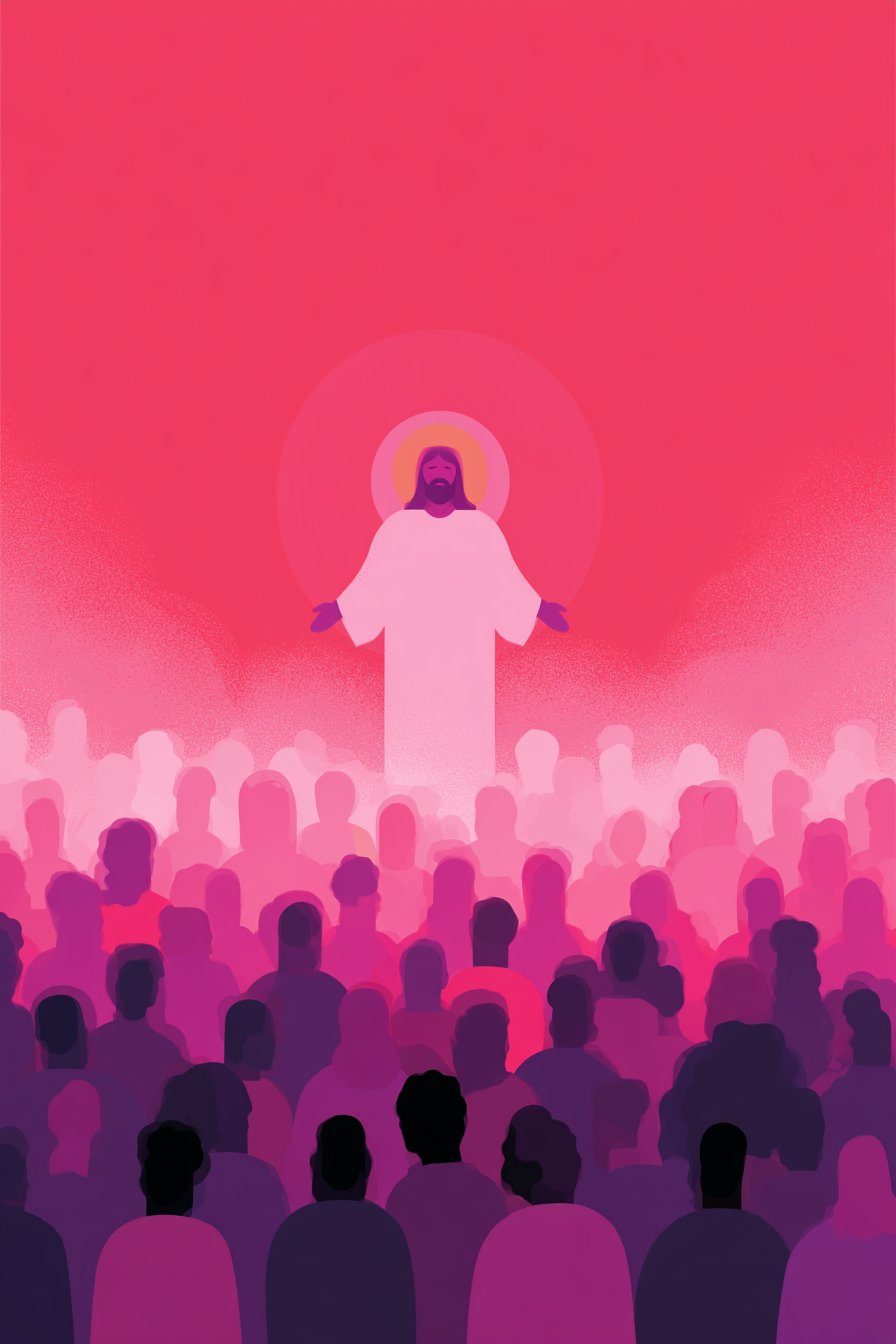
Understanding Corpus Christi
The Solemnity of the Most Holy Body and Blood of Christ, commonly known as Corpus Christi, is a feast in the Catholic Church that honors the real presence of Jesus Christ in the Eucharist. This celebration underscores the belief that Jesus is truly present—Body, Blood, Soul, and Divinity—in the consecrated bread and wine. Instituted in 1264 by Pope Urban IV, the feast was established to highlight the significance of the Eucharist in the life of the Church and to encourage the faithful to deepen their devotion to this central sacrament. The name 'Corpus Christi' translates to 'Body of Christ' in Latin, reflecting the focus of the celebration.
The feast is traditionally observed on the Thursday after Trinity Sunday, though in many countries, including the United States, it is celebrated on the following Sunday. This timing allows the faithful to reflect on the mystery of the Eucharist in the context of the Holy Trinity. The liturgy of Corpus Christi is marked by special hymns, prayers, and often a procession, where the Blessed Sacrament is carried through the streets, symbolizing Christ's presence among His people. This procession serves as a public witness to the faith and a communal act of adoration.
Origins of Corpus Christi
The origins of Corpus Christi trace back to the 13th century. St. Juliana of Mont Cornillon, a Belgian Augustinian nun, experienced visions that inspired her to advocate for a feast dedicated to the Eucharist. She shared her vision with Bishop Robert de Thorete of Liège, who instituted the feast in his diocese in 1246. The celebration gained universal recognition when Pope Urban IV, formerly Jacques Pantaléon, extended it to the entire Church in 1264. He commissioned St. Thomas Aquinas to compose the liturgical texts for the feast, including the hymns 'Pange Lingua' and 'Tantum Ergo,' which remain integral to Eucharistic adoration.
The establishment of Corpus Christi was also influenced by the Eucharistic Miracle of Bolsena in 1263, where a priest doubted the real presence of Christ in the Eucharist, and during Mass, the consecrated host began to bleed. This miracle reinforced the Church's teaching on the Eucharist and led to the institution of the feast. The tradition of Eucharistic processions, introduced by Pope John XXII in 1316, became a prominent feature of Corpus Christi celebrations, symbolizing the Church's public profession of faith in the real presence of Christ.
This is my body, which will be given for you; do this in memory of me.
— Luke 22:19Whoever eats my flesh and drinks my blood remains in me and I in them.
John 6:56Symbols & iconography
- Eucharistic HostRepresents the Body of Christ, central to the celebration.
- ChaliceSymbolizes the Blood of Christ, integral to the Eucharist.
- ProcessionA public display of faith, often featuring the Blessed Sacrament.
Customs & traditions
Eucharistic Procession
A public procession with the Blessed Sacrament, often accompanied by hymns and prayers.
Exposition and Benediction
Displaying the Blessed Sacrament for adoration, followed by a blessing.
Special Masses
Celebrating the Eucharist with particular hymns and readings emphasizing the real presence.
Prayers & readings
About this date
Corpus Christi is celebrated on the Thursday after Trinity Sunday, or the following Sunday in some regions, to honor the real presence of Christ in the Eucharist.
Frequently asked
Why is Corpus Christi celebrated?
To honor the real presence of Jesus Christ in the Eucharist.
When is Corpus Christi observed?
Traditionally on the Thursday after Trinity Sunday; in the U.S., often on the following Sunday.
What is the significance of the Eucharistic procession?
It publicly displays the Blessed Sacrament, symbolizing Christ's presence among His people.
Pray it as a household
Bring the feast into your family’s day
Solua walks your family through the day’s prayer together — a few unhurried minutes, shaped by the season.
Pray Together