
Ambrose
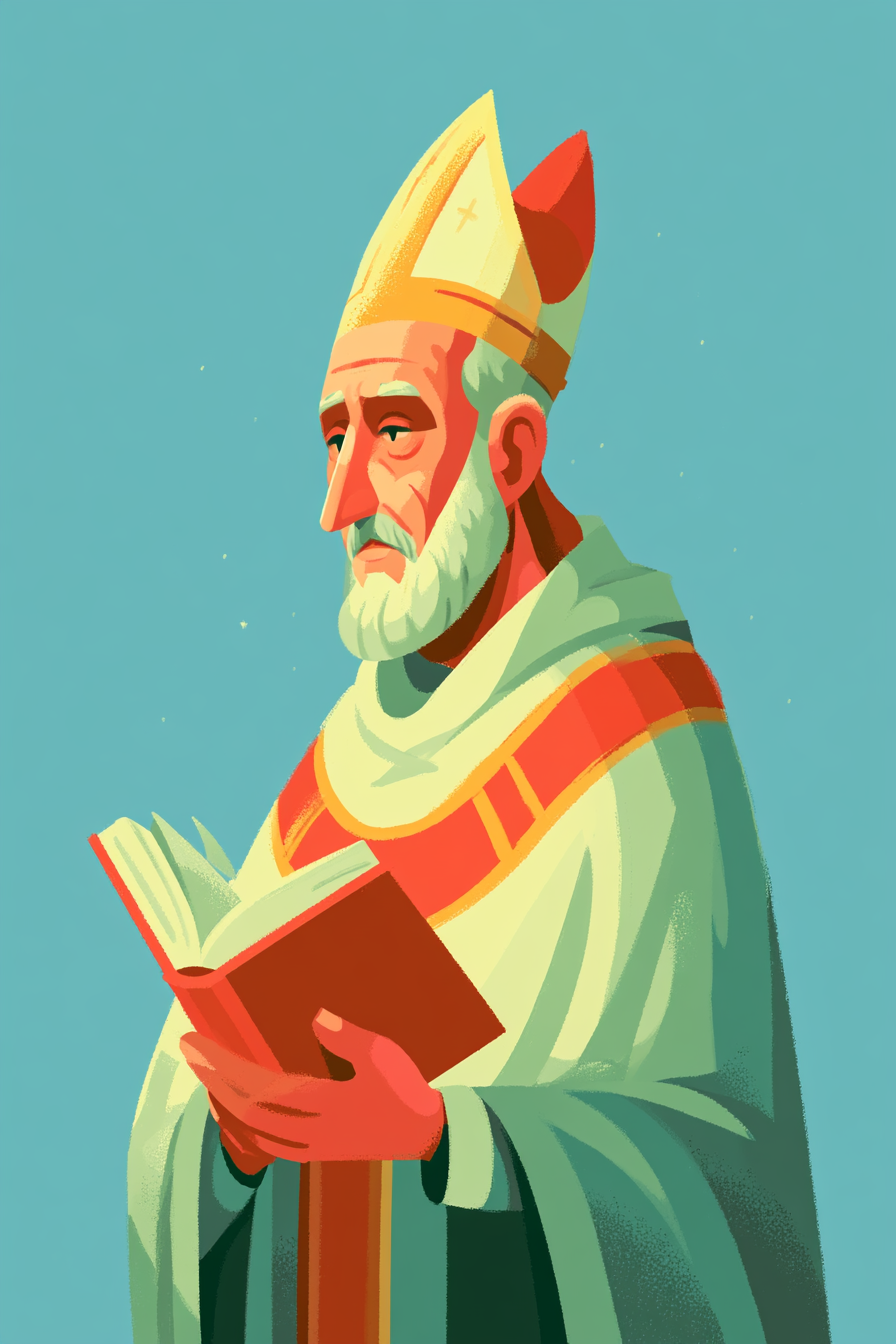
St. Ambrose was a renowned theologian and the Bishop of Milan, known for his eloquent preaching and significant contributions to the early Church. His teachings emphasized the importance of faith and the role of the Church in society.
- Feast day
- Dec 7
- Known as
- Doctor · Bishop
- Era
- early-church
Who they were
Ambrose was born around 340 AD in Treviri (modern-day Trier, Germany) to a Christian family. His father served as a Roman praefectus, and Ambrose received a classical education in rhetoric, law, and literature. He began his career as a lawyer and a governor of the province of Aemilia-Liguria, where he earned a reputation for his ability to govern wisely and justly.
In 374 AD, Milan was rocked by a crisis over the Bishopric, which culminated in Ambrose being elected as bishop unexpectedly. Despite being a layman at that time, he accepted the position, demonstrating a remarkable ability to lead and inspire others. Soon after his ordination, he became a shining light in the Church, known for his eloquent preaching and his efforts to integrate the theological insights of the Church with the needs of the society around him.
Ambrose was a staunch advocate for the autonomy of the Church, often standing up to imperial power. Most notably, he confronted Emperor Theodosius I after the latter ordered the massacre of the Thessalonicans in 390 AD. Ambrose's insistence on the primacy of the Church over the state exemplified his belief in the moral authority of Christian teaching. His famous refusal to allow the emperor to receive Communion until he did penance highlighted his commitment to the Church's integrity.
In addition to his political actions, Ambrose made significant theological contributions. He was one of the first theologians to articulate the concept of original sin and the importance of the sacraments, including the Eucharist. His writings on Christian doctrine, especially on the Trinity, were influential in the development of early Christian thought. He wrote extensively, with notable works such as "On the Duties of the Clergy" and "On the Holy Spirit," where he emphasized the divinity of Christ against Arianism.
Ambrose was also known for his pastoral care. He was deeply committed to the spiritual and moral formation of his flock, grounding his teachings in Scripture and tradition. His warm and compassionate approach made him a beloved figure in Milan, fostering a vibrant Christian community. The baptism of St. Augustine in 387 AD marks one of the highlights of his pastoral ministry, illustrating Ambrose’s profound impact on the lives of individuals seeking truth and redemption.
Ambrose's legacy extends beyond his lifetime. He played a crucial role in forming the liturgical practices of the Church, contributing to hymns and the structure of the Mass that have influenced Christian worship for centuries. He is recognized as a Doctor of the Church, reflecting his deep understanding and articulation of Christian doctrine. Ambrose died on April 4, 397 AD, and his feast day is celebrated on December 7. His influence is still felt in contemporary Christianity, particularly through his insistence on the Church's role in public life and the depth of faith in the midst of societal challenges.
Remembered for
St. Ambrose is especially remembered for his powerful writings that laid the groundwork for Christian theology in the West. He was a key figure in the development of the doctrine of the Church, with significant contributions to the understanding of the Sacraments and the nature of Christ. His eloquent sermons often emphasized the importance of moral integrity and the role of the bishop as a shepherd of God's people.
Beyond his theological work, St. Ambrose is known for his efforts in social justice and caring for the poor. His life was marked by a commitment to defending the faith and actively engaging in the political affairs of his time, exemplifying a model of Christian leadership. His great hymns and liturgical contributions continue to inspire worship within the Church today.
Dec 7
How to recognize them
- Bishop's mitreRepresents his role as a bishop leading the Church.
- Papal crossIndicates his dedication to the authority and doctrine of the Church.
- ScrollSymbolizes his extensive writings and teachings on Christian theology.
- Gold coinsReflects his charity and care for the poor and needy.
- HymnalRepresents his contribution to sacred music and liturgy.
If you are a friend of the world, you are an enemy of God.
St. AmbrosePray with this saint
Holy Ambrose, guide us with your wisdom and courage as we strive to live our faith boldly. Help us to discern God’s will in our lives and to support one another in faith and love. Intercede for us, that we may have the strength to defend the truth and serve those in need.
For your household
Incorporating St. Ambrose into family life can be a wonderful way to teach children about the strength of faith and the importance of community. Families might begin by celebrating his feast day on December 7 with a special meal or by sharing stories about his life and teachings. Discuss how St. Ambrose courageously stood for the faith and how they can do the same in their own lives.
At the dinner table, families can take turns sharing how they have seen or experienced acts of kindness and service, reflecting on Ambrose's commitment to the poor and marginalized. You can also pray a novena leading up to his feast day, asking for his intercession to grow in virtue and to be spreaders of God's love in their communities.
Additionally, consider naming a new child after St. Ambrose or recognizing their name day in a special way, perhaps with a small family celebration. Encourage children to reflect on how they can be leaders among their peers, just like St. Ambrose was a leader in the Church, championing the rights of others and teaching with integrity and love.
Pray as a household
Carry your family in prayer
Solua gives your family a simple, faithful rhythm of prayer — one unhurried moment at a time, for the people you carry by name.
Begin