
St. Benedict of Nursia
Benedict founded Monte Cassino and wrote the Rule of St. Benedict, the bedrock of Western monasticism. His motto Ora et Labora — Pray and Work — shaped European civilization.
- Feast day
- Jul 11
- Known as
- Founder · Religious
- Era
- early-church
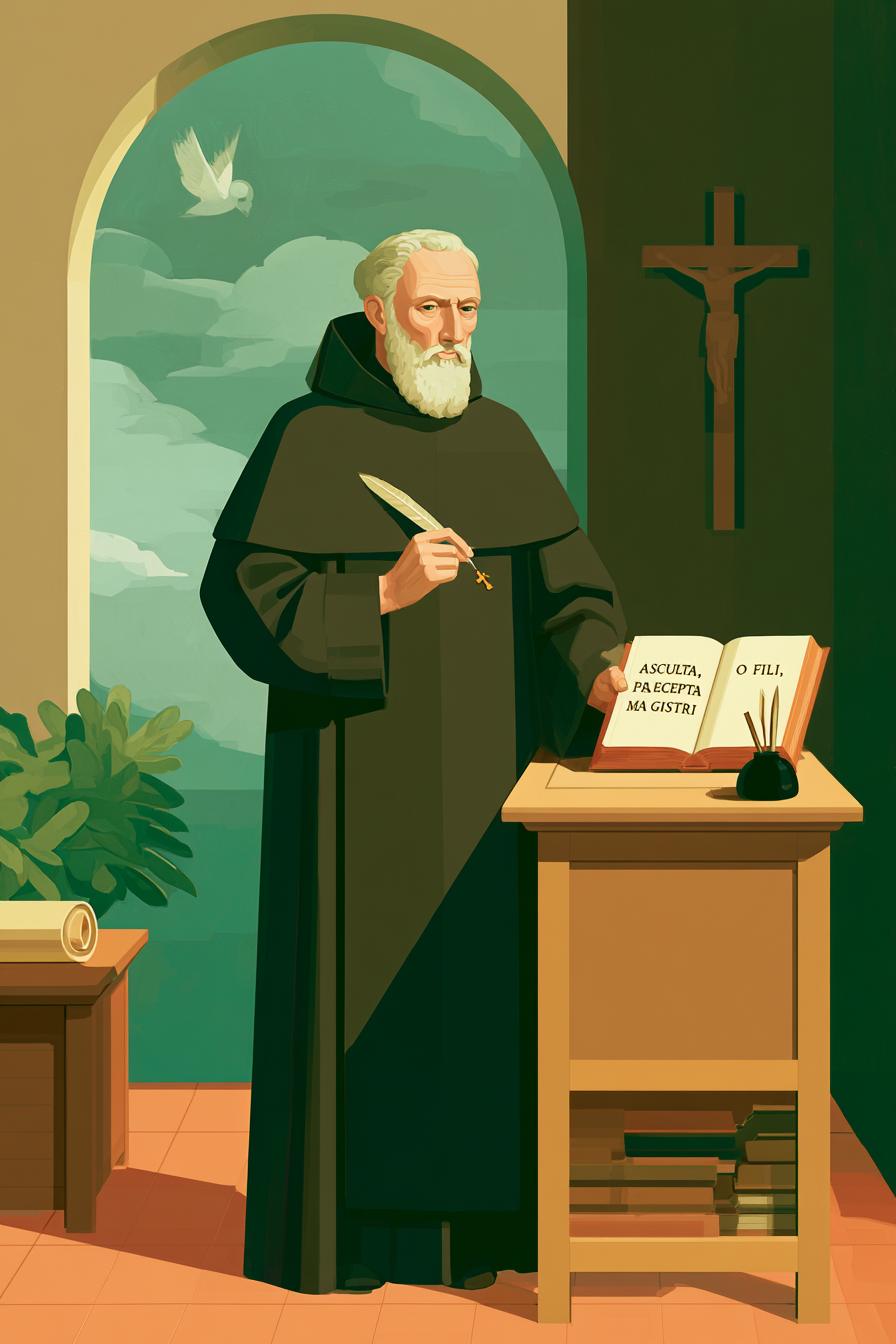
Who they were
St. Benedict of Nursia was born around 480 AD in a noble family in Norcia, Italy. As a young man, he pursued studies in Rome, where he was deeply disturbed by the moral decay he witnessed. This led him to seek a more contemplative life. Around 500 AD, he withdrew to the countryside near Subiaco, where he spent three years as a hermit, dedicating himself to prayer and solitude. His profound spirituality and asceticism soon attracted followers, and he established twelve monasteries in the region.
In 529 AD, seeking to create a more stable community, St. Benedict founded the monastery of Monte Cassino, which became pivotal in the spread of monasticism throughout Europe. It was here that he composed the Rule of St. Benedict, a set of guidelines that together emphasized the importance of prayer, work, and community life. The Rule, founded on moderation, balance, and respect for each individual, ultimately served as a template for monastic life and influenced countless monasteries in the West.
St. Benedict's emphasis on the motto "Ora et Labora" — Pray and Work — profoundly shaped the character of Western monasticism. His community was characterized by the balance of prayer and pragmatic daily responsibilities, laying an intellectual and spiritual foundation for countless subsequent generations.
Throughout his life, St. Benedict faced various challenges, including opposition from local leaders and other monastic communities. His wisdom and discernment enabled him to navigate these difficulties, often bringing about reconciliation and fostering peace among differing factions. One notable encounter involved Br. Maurus, a monk whom Benedict saved from drowning through an act of divine intervention, illustrating the saint's deep connection with God and his role as a spiritual guide.
Benedict soon traveled to Rome, and established more monasteries, gathering numerous followers drawn to his way of life. His reputation for holiness and moral integrity spread, and he became a beacon of the Faith during a tumultuous period in history.
He died in 543 AD at Monte Cassino, where he was buried. His legacy continued to flourish long after his passing, as his Rule was adopted by many communities and played a vital role in shaping medieval European culture, education, and Christian spirituality.
St. Benedict is venerated as the patron saint of Europe, students, and monks. His teachings instilled a spirit of community, prayer, and work that continues to inspire both religious and laypeople today. His life serves as a reminder of the importance of faith in action and the enduring power of monasticism in a world often in need of refuge and peace. His feast day is celebrated on July 11, marking his significant contributions to the Church and society.
Remembered for
Saint Benedict of Nursia is remembered for his profound impact on Western monasticism through the establishment of the Benedictine Order and the writing of the Rule of St. Benedict. This foundational work provided a guiding framework for monastic life, emphasizing communal living, prayer, and manual labor, encapsulated in the motto "Ora et Labora" — Pray and Work. His rule remains influential, promoting a balanced life of spirituality and work that resonates deeply with the Catholic faith.
In addition to his contributions to monastic life, St. Benedict is also known for his miracles and his commitment to combating evil through prayer and faith. His courage in facing adversity and temptation is an enduring example for believers, showcasing the power of steadfastness in faith. Through his intercession, many have sought strength and guidance in their own spiritual journeys, making him a beloved figure in the Church.
Jul 11
How to recognize them
- Monastic RuleRepresents the guidance St. Benedict provided for monastic life.
- CrozierSymbolizes his role as a shepherd of souls in the Church.
- AnchorOften associated with stability and hope, reflecting his emphasis on a grounded life of faith.
- Monk's HabitA reminder of the simplicity and dedication of monastic life.
- BookRepresents the Rule of St. Benedict as a written guide for the community.
Ora et labora, which means "Pray and Work," is a motto that expresses the ideal balance of prayer and labor in the life of a monk. This principle has influenced countless lives throughout history, emphasizing the importance of both spiritual and physical work in our daily lives.
St. Benedict of NursiaPray with this saint
Holy Benedict, guide us in our daily prayers and work. Help us find balance in our lives, focusing on both seeking God and serving others. May we grow in love and community, following your example of faithfulness and dedication.
For your household
Incorporating St. Benedict into your family life can be a beautiful way to cultivate a spirit of prayer and work in your home. Families might start by celebrating his feast day on July 11 with a special meal reflecting on the virtues he espoused. This could include sharing stories about his life and discussing the importance of balance between prayer and daily responsibilities.
Another meaningful tradition is to create a small prayer corner in your home, inspired by monastic simplicity, where family members can gather for daily prayers or meditation. You can include a statue or image of St. Benedict, reminding everyone of his guidance. Encourage children to think about how they can practice Ora et Labora in their own lives, whether it be through helping with chores at home or taking time for prayer.
Additionally, you might wish to incorporate St. Benedict's values when discussing the challenges your family faces. If difficulties arise, remind one another to pray and work through them, just as Saint Benedict taught. Encourage children to choose the name Benedict for a confirmation name or, for younger ones, celebrate their name day if they carry his name, discussing his life and ideals throughout the day.
Pray as a household
Carry your family in prayer
Solua gives your family a simple, faithful rhythm of prayer — one unhurried moment at a time, for the people you carry by name.
Begin