
Catherine Labouré
St. Catherine Labouré is known for her profound visions of the Virgin Mary, which inspired the creation of the Miraculous Medal. Her life was dedicated to serving the poor and spreading devotion to Mary.
- Feast day
- Feb 8
- Known as
- Mystic · Religious
- Era
- modern
Who they were
Catherine Labouré was born on May 2, 1806, in Fain-lès-Montbard, France, into a devout family. As the ninth of eleven children, she experienced the loss of her mother at a young age, which deepened her faith and devotion to the Virgin Mary. Growing up, Catherine felt a strong call to religious life, often seeking solace in prayer and participating in the sacraments.
At the age of 24, she joined the Daughters of Charity, a religious order founded by St. Vincent de Paul. Catherine took her vows and began her life of service, particularly caring for the poor and sick. Her life took a transformative turn when she experienced significant spiritual visions, the first being on July 18, 1830. In this vision, she saw the Virgin Mary standing on a globe, surrounded by radiant light, and holding a set of rings. From her hands, beams of light streamed forth, symbolizing the graces that Mary bestows upon those who ask for them.
During this vision, Mary asked Catherine to have a medal struck according to the design shown to her, promising that those who wore it would receive great graces. This Medal, later known as the Miraculous Medal, quickly became a significant symbol of faith and devotion worldwide. Despite her obvious calling, Catherine initially hesitated to share her visions due to their extraordinary nature and the fear of being dismissed or misunderstood.
Eventually, however, she confided in her confessor, and the medal was produced, first distributed in 1832. The miraculous occurrences attributed to the medal’s wearing led to its widespread popularity, with many miraculous healings reported among those who sought the intercession of Mary through Catherine’s vision.
Catherine lived a humble life, never seeking fame or recognition for her pivotal role in promoting the medal. Instead, she continued her work with the poor and the sick, living in quiet obscurity while devoting herself to God and her community. She was often described as gentle, compassionate, and deeply devoted to her spiritual life.
Catherine Labouré passed away on December 31, 1876, in the Motherhouse of the Daughters of Charity in Paris. Her legacy continued to grow well beyond her earthly life, as countless individuals were inspired by her visions and the divine connection she shared with Mary.
In 1933, she was beatified by Pope Pius XI, and canonized by Pope Pius XII in 1947. St. Catherine Labouré is remembered not only for her visions and the miraculous medals but also for her committed service to the marginalized and her unwavering faith in God's providence and the intercession of the Virgin Mary. Her life serves as a reminder of the powerful impact of faith in the modern world and the profound depth of Mary’s love for her children, encouraging devotion and trust in God’s plan.
Remembered for
St. Catherine Labouré is best known for her remarkable visions of the Virgin Mary, which ultimately led to the creation of the Miraculous Medal, a sacramental that symbolizes Mary's grace and protection. This medal has become a powerful tool for many in their spiritual lives, promoting devotion and faith. Her life was dedicated to the service of the poor, embodying humility and charity, which are central to her legacy.
In addition to her mystical experiences, St. Catherine is remembered for her quiet commitment to the religious life as a member of the Daughters of Charity. Her experiences with Mary have inspired countless devotees to deepen their relationship with Jesus through the intercession of His mother. Her steadfast faith, even in trials, resonates with many, inviting believers to trust in God’s plan and seek Mary’s comfort in times of need.
Feb 8
How to recognize them
- Miraculous MedalRepresents the visions of Mary and the grace bestowed through her intercession.
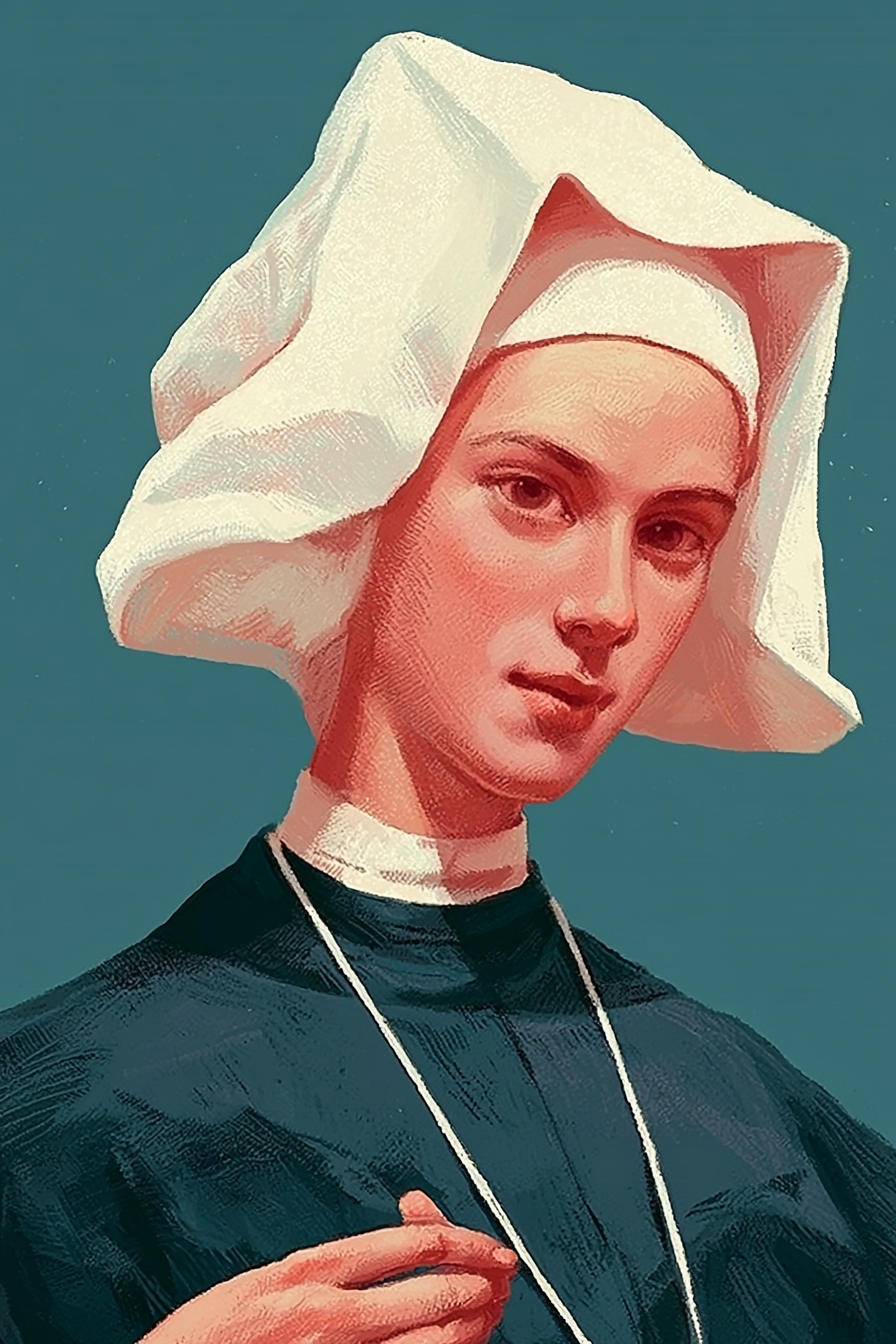
- Daughters of Charity HabitSymbolizes her commitment to serving the poor and living a life of humility.
- FlameReflects her deep faith and the light she brought into the lives of those around her.
"If you could see the grace that God gives me, you would be as happy as I am!"
St. Catherine LabouréPray with this saint
Holy Catherine Labouré, intercede for us that we may grow in our devotion to Mary, seeking her guidance in all our endeavors. Help us to embrace our own crosses with courage and to serve the poor with a joyful heart. May your visions inspire us to trust in God's merciful love.
For your household
Integrating St. Catherine Labouré into your family's spiritual life can be both enriching and inspiring. On her feast day, February 8, consider celebrating with family prayers dedicated to her, asking for her intercession for specific intentions. This is a great time to create or wear the Miraculous Medal, explaining to children its significance in fostering a deeper connection to Mary.
Encourage conversations about St. Catherine and her virtues of humility and service. Share her story of how she dedicated her life to helping others, especially the poor. As a family, you could participate in community service or help those in need, embodying her spirit of charity. You might also set aside a special day each month to reflect on her life and pray the rosary in her memory, inviting her to be a part of your family’s spiritual journey.
Additionally, consider incorporating traditions such as lighting a candle in her honor or creating a small altar with a statue of St. Catherine dressed in her religious habit. This visual reminder can inspire daily conversations about faith, compassion, and the beauty of relying on God's grace just as she did.
Pray as a household
Carry your family in prayer
Solua gives your family a simple, faithful rhythm of prayer — one unhurried moment at a time, for the people you carry by name.
Begin