
John Henry Newman
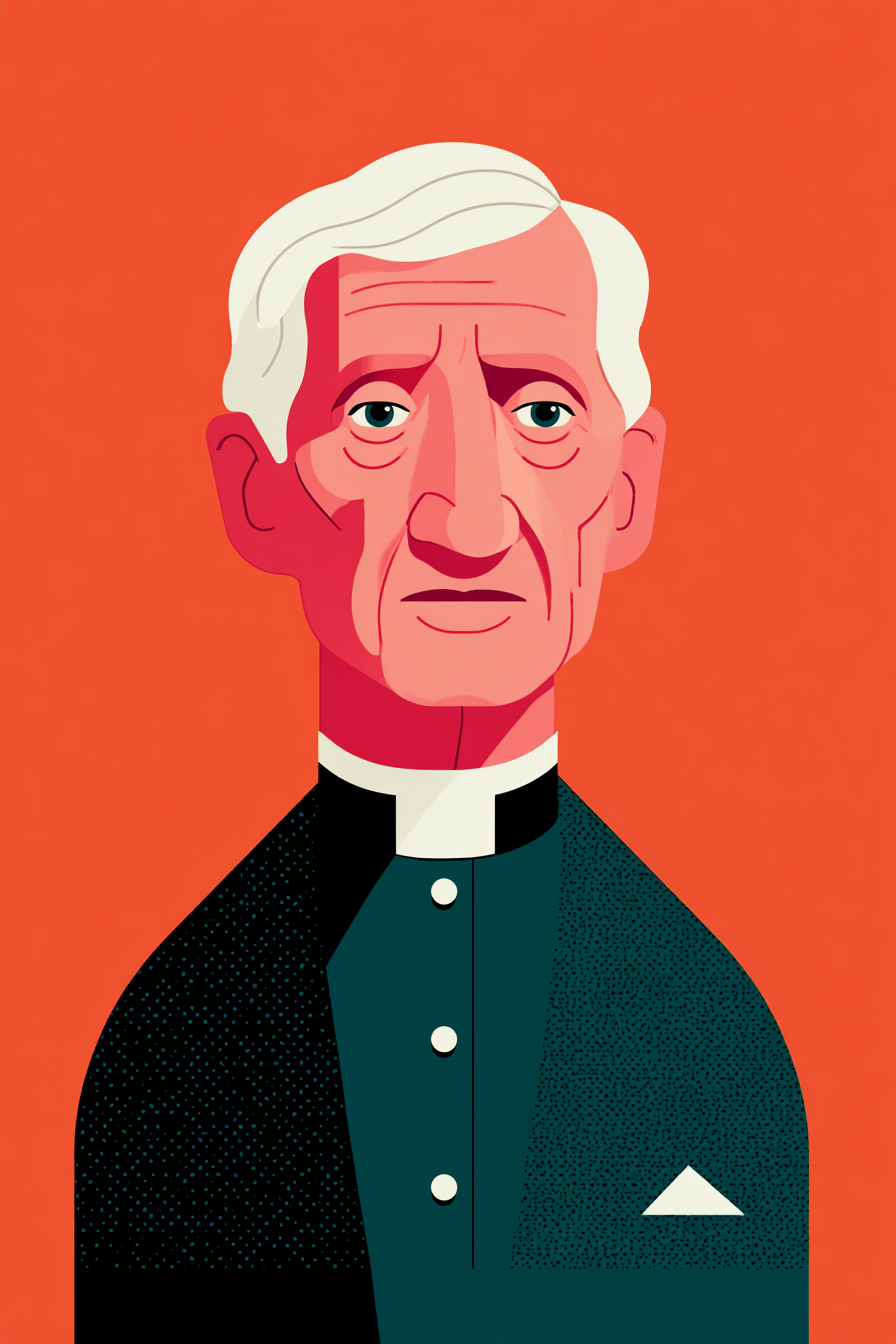
John Henry Newman was an English cleric and cardinal known for his theological writings and commitment to the truth. His journey of faith continues to inspire many.
- Feast day
- Oct 9
- Known as
- Bishop
- Era
- modern
Who they were
John Henry Newman was born on February 21, 1801, in London, England, to a banking family. He was the oldest of six children and raised in the Anglican tradition. Newman displayed an early aptitude for scholarship, entering Trinity College, Oxford, at the age of 15. His time at Oxford solidified his commitment to intellectual inquiry and the faith of his youth, and he eventually became a fellow and tutor at Oriel College.
In 1833, Newman was instrumental in the Oxford Movement, a movement within the Church of England that sought to reintroduce some of the Catholic practices and beliefs that had been lost during the Protestant Reformation. This movement aimed to revitalize Anglicanism by emphasizing the sacramental life, the authority of the Church, and the importance of tradition. His notable work, "Tract 90," published in 1841, sought to reconcile the Thirty-Nine Articles of the Church of England with Catholic doctrine, drawing criticism and controversy.
Struggling with his allegiance to the Anglican Church, Newman’s theological explorations led him toward the Catholic faith. He officially converted to Catholicism in 1845, which was a significant and personal crisis that drew both admiration and dissent. Upon his conversion, Newman was received into the Catholic Church by the famous convert, Blessed Dominic Barberi.
After his conversion, he was ordained as a Catholic priest and later became a cardinal in 1879. Newman founded the Oratory of St. Philip Neri in Birmingham, where he worked tirelessly to promote the Catholic faith through education and pastoral care. His commitment to education was evident in his founding of the Catholic University of Ireland, modeled after the university at Oxford, where he served as its first rector.
Throughout his life, Newman produced a significant body of theological work that encompassed apologetics, scripture, and ecclesiology. His writings, such as "Apologia Pro Vita Sua," "The Idea of a University," and "Loss and Gain," provided deep insight into his conversion experience and offered a profound understanding of the relationship between faith and reason.
Newman's later years were marked by his deep spiritual life and reflection. He was known for his humble demeanor, personal piety, and commitment to truth, which resonated with many. His insights into the inner workings of faith made him a beloved figure within both Catholic and Anglican communities.
John Henry Newman passed away on August 11, 1890. His legacy endures through his writings and the many people he inspired to seek truth in their own faith journeys. He was canonized by Pope Francis on October 13, 2019, as a testament to his enduring influence and holiness. His feast day is celebrated on October 9, where his life and works continue to inspire both the faithful and those in search of truth.
Remembered for
Remembered for his profound theological writings, John Henry Newman made significant contributions to the understanding of Christian faith and thought. His book 'Apologia Pro Vita Sua' remains a classic, detailing his journey to Catholicism and defending its doctrines against critics. Newman's emphasis on the importance of conscience and the development of doctrine has left a lasting impact on Catholic teaching.
As a cardinal, Newman was committed to education and founded the Catholic University of Dublin, fostering a space for academic inquiry rooted in faith. His life exemplifies a deep dedication to truth, belief, and the pursuit of God, making him a spiritual guide for many who seek understanding in their own journeys of faith.
Oct 9
How to recognize them
- BirettaA traditional hat worn by bishops, symbolizing Newman's rank and ecclesiastical authority.
- BookRepresents Newman's extensive writings and theological contributions.
- LightSymbolizes enlightenment and guidance in the faith, reflecting Newman's pursuit of truth.
- CrosierThe staff of a bishop, denoting his role as a shepherd to the faithful.
- Papal insigniaRepresents his elevation to cardinal and connection to the universal Church.
To be deep in history is to cease to be a Protestant.
John Henry Newman, An Essay on the Development of Christian Doctrine, 1845Pray with this saint
Holy John Henry Newman, guide us on our journey toward truth and help us deepen our faith. Inspire us to seek God with a sincere heart and never waver in our commitment to love and serve others. May your intercession light our path and strengthen our resolve to follow God's will in all things.
For your household
For your household, consider celebrating the feast day of St. John Henry Newman on October 9. You might begin the day by reading one of his writings or discussing his journey to Catholicism as a family. This can spark thoughtful conversations with children about faith, belief, and the importance of following one’s conscience.
Incorporating a special meal or tradition to remember St. Newman could also enrich your family’s spiritual life. Perhaps host a small gathering or dinner, sharing stories about his impact on the Church and education. Teach your children to turn to him in prayer, especially in times of doubt or when making difficult decisions, entrusting their struggles to his intercession.
You may also consider adopting the practice of including Newman’s prayers in your family prayer routine, encouraging family members to express their intentions and ask for his guidance. Emphasizing the importance of truth and faith in everyday life creates a warm connection with this saint, illustrating for children that they, too, can seek meaningful paths in their own spiritual journeys.
Pray as a household
Carry your family in prayer
Solua gives your family a simple, faithful rhythm of prayer — one unhurried moment at a time, for the people you carry by name.
Begin