Kateri Tekakwitha
Kateri Tekakwitha, a 17th-century Mohawk woman, is celebrated as the first Indigenous saint of North America. Her life was marked by a deep faith and a commitment to serving others, making her a beloved figure among many.
- Feast day
- Apr 17
- Known as
- Lay
- Era
- early-modern
Who they were
Kateri Tekakwitha was born in 1656 in what is now Auriesville, New York, to a Mohawk father and an Algonquin mother. Her early life was turbulent, as her family faced the devastating impacts of warfare between Indigenous tribes and European settlers. When Kateri was just four years old, a smallpox outbreak struck, claiming the lives of her parents and leaving her with significant scars and impaired vision.
Raised by her uncle, a Mohawk chief, Kateri's faith began to take shape as she grew older. She was introduced to Christianity by the Jesuit missionaries who came into her village. Despite her uncle's resistance, Kateri's heart was ignited with a desire to know Christ. At the age of 19, she received her First Communion, which deeply impacted her life and marked a turning point in her spiritual journey.
Kateri faced significant challenges as she sought to live out her faith. Her conversion meant she was often at odds with her community's norms, leading to social ostracism. Yet, her conviction remained unwavering. Determined to live a life of purity and prayer, she fled to the Jesuit mission in Canada, where she was welcomed and embraced by a community of fellow believers.
In the mission of Saint-Louis, she chose a life of chastity and dedicated herself to prayer and serving others. Kateri was known for her acts of charity, often caring for the sick and teaching the children in her community about Christ. Her devotion was profound, and she would often spend long hours in prayer, seeking closeness to God and contemplating her faith deeply.
Her life was not without suffering. Kateri encountered various physical ailments, yet she bore her suffering with grace, drawing strength from her faith. She often found joy in her trials, exemplifying the spirit of selflessness and humility that characterized her life.
Kateri Tekakwitha died on April 17, 1680, at the age of 24. Upon her death, witnesses reported that her facial scars vanished, revealing a beautiful countenance. Her profound spirituality and dedication to her faith led to her being called "the Lily of the Mohawks."
Kateri's legacy continued to grow posthumously, as many testimonies of miracles and her intercession emerged. She was canonized by Pope Benedict XVI on October 21, 2012, making her the first Indigenous saint of North America. Today, she is remembered as a powerful intercessor and a beacon of faith for all, especially for Indigenous peoples throughout the continent. Her life invites all to embrace Christ's teachings and live a life of love and service, regardless of cultural backgrounds or life circumstances.
Remembered for
Kateri Tekakwitha is remembered for her deep faith and the conversion to Christianity that she embraced despite the challenges faced by her people. She dedicated her life to helping those in need and is known for her compassion and commitment to living a virtuous life. Many miracles have been attributed to her intercession, especially healing miracles, which have solidified her place as a beloved saint within the Catholic Church.
Her profound connection to nature and the Indigenous way of life is also significant, reflecting her unique journey as the first Indigenous saint of North America. She serves as a unifying figure for both Indigenous peoples and Catholics, inspiring many with her example of strength, humility, and dedication to God. Kateri's story continues to encourage individuals to embrace their own faith journeys within the context of their cultural identities.
Apr 17
How to recognize them
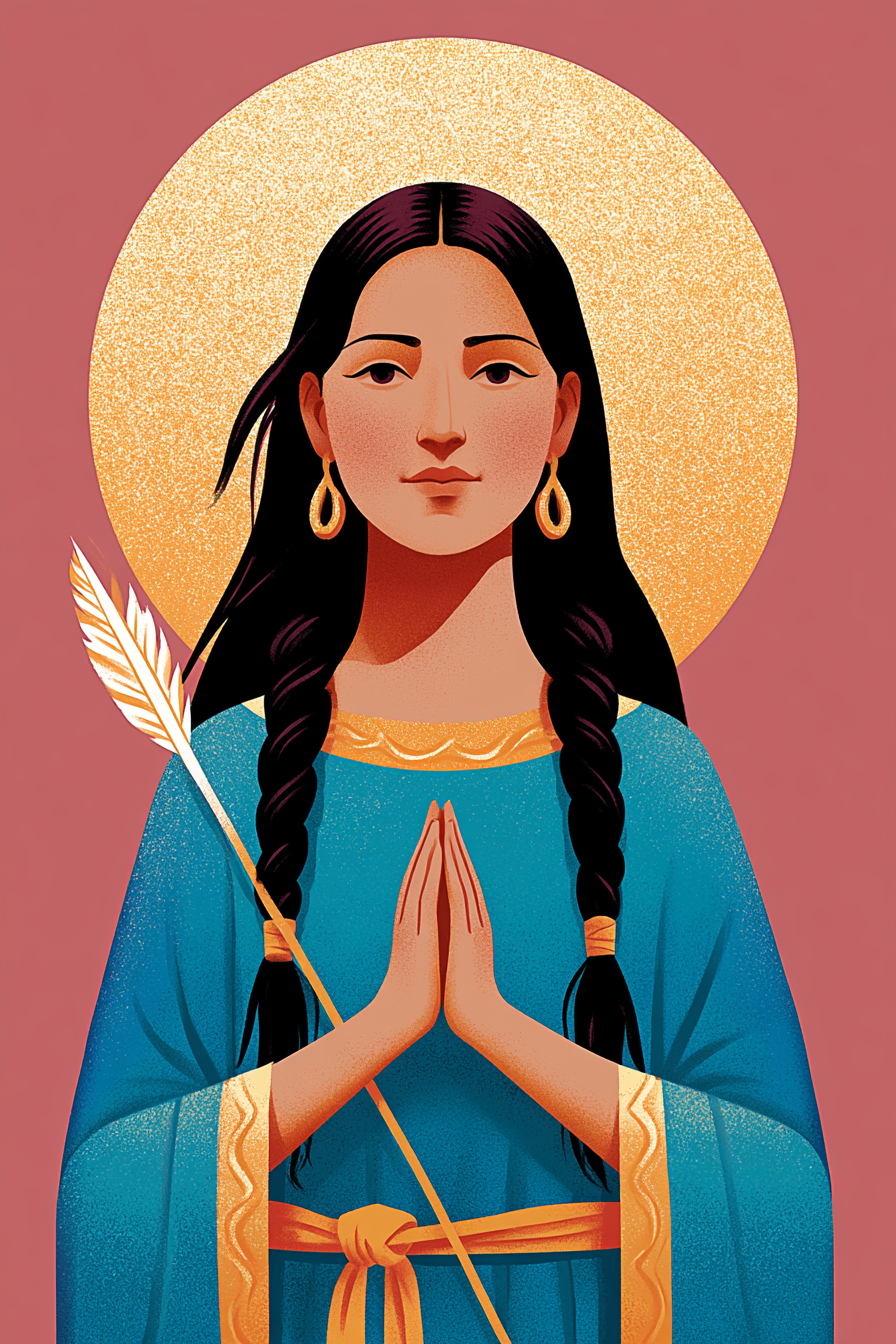
- FeatherRepresents Kateri's connection to her Native American heritage and the spirituality of nature.
- LilySymbolizes her purity and the beauty of her spiritual life.
- CrossIndicates her deep commitment to Christ and her role as a Christian evangelist among her people.
- ShellReflects her understanding of the water's significance in Native spirituality and baptism.
I will be as the sun that shines upon the world, and I shall help those who are in need to find their way to heaven.
Kateri TekakwithaPray with this saint
Holy Kateri, radiant daughter of the Mohawk, pray for us that we may have the strength to follow Christ as you did. Help us to be compassionate and devoted to serving others, and guide our hearts towards faithfulness in all things. May your example inspire us to live in harmony with nature and our communities.
For your household
Integrating St. Kateri Tekakwitha into family life can be a beautiful way to foster faith and connection, particularly for families with Indigenous heritage or those interested in the rich tapestry of North American saints. You might begin by sharing her story, emphasizing her deep love for God and her unwavering commitment to her culture.
Consider establishing a family tradition on her feast day, April 17, by lighting a candle in honor of her memory and sharing prayers or stories about her life. You could also create a small altar with symbols associated with her, such as a feather, a small cross, or images that represent nature, reminding the family of her connection to the earth.
Engage your children in conversations about how they can show compassion and serve others in their daily lives, reflecting Kateri's own virtuous example. In times of suffering or uncertainty, invite them to pray for her intercession, encouraging them to feel connected to her legacy and the faith community she represents. Additionally, families might choose to celebrate name-days for anyone named Kateri, using this occasion to recall her story and virtues.
Pray as a household
Carry your family in prayer
Solua gives your family a simple, faithful rhythm of prayer — one unhurried moment at a time, for the people you carry by name.
Begin