
St. Lucy
Lucy of Syracuse refused to marry and was martyred around 304 AD. Her name means "light," and her feast near the winter solstice brought hope of returning light. She is especially beloved in Scandinavia.
- Feast day
- Dec 13
- Known as
- Martyr · Lay
- Era
- early-church
Who they were
St. Lucy, also known as Lucia of Syracuse, lived during the early days of Christianity in the Roman Empire. Born into a wealthy family in Syracuse, Sicily, around the year 283, she was deeply devout and dedicated to her faith from a young age. Her name, derived from the Latin "lux," meaning "light," foreshadowed her future significance as a bearer of hope in the darkness.
At a time when Christians faced severe persecution, Lucy vowed to remain a virgin and dedicate her life to God. This decision did not sit well with her mother, who arranged for her to marry a pagan suitor. To defy her mother’s wishes and uphold her vow, Lucy secretly sought intercessions from St. Agatha, another martyr and virgin saint, praying for her own strength and guidance.
When her suitor learned of her rejection, he informed the local authorities, who were quick to act against her. Lucy was arrested and brought before a judge, where she boldly proclaimed her Christian faith, refusing to renounce her commitment to God despite threats and tortures. Her steadfastness in front of her oppressors set a powerful example of faith and courage for future generations of Christians.
Tradition holds that Lucy endured many horrific torments, including attempts to drag her away to a brothel and being subjected to various forms of torture. In one account, as her eyes were gouged out, a miraculous event occurred; Lucy's vision was restored in a divine act of compassion, symbolizing her name and her role as a beacon of light amidst persecution.
Ultimately, Lucy was martyred around the year 304 AD, likely during the reign of Emperor Diocletian, who had intensified the persecution of Christians. It is said that she died by the sword, remaining faithful to her beliefs until the end. Her martyrdom was later confirmed by witnesses who recounted her unwavering spirit and miraculous interventions.
St. Lucy's legacy continued to bear fruit even after her death. She became a symbol of purity, light, and hope within the Christian faith, and her feast day on December 13 falls near the winter solstice—a time traditionally associated with the anticipation of returning light after the darkest days of winter. In medieval Europe, particularly in Scandinavia, her celebration grew in popularity, as she became associated with light festivals and customs that herald the arrival of longer days.
Families often honor St. Lucy through various traditions, including the custom of young girls dressing as "Lucy" in white robes, adorned with a crown of candles, symbolizing her virtue and faith. This visual representation further solidifies her link to light and hope, inspiring many to persevere in their faith despite adversity.
Her impact transcended geography and time, being invoked in various Catholic prayers and practices, particularly among those seeking guidance in matters of faith, vision, and commitment. St. Lucy stands as a reminder that true light shines brightest in the face of darkness, encouraging all believers to remain steadfast in their spiritual journeys.
Remembered for
St. Lucy is remembered for her steadfast faith and commitment to God even in the face of persecution. A young Christian martyr from Syracuse in Sicily, she courageously rejected a forced marriage, vowing instead to dedicate her life to Christ. This act of defiance against societal norms exemplifies her virtue of fortitude, inspiring countless believers through the centuries.
Her name, meaning 'light,' reflects her role as a symbol of hope during the dark winters, particularly honored during her feast day on December 13th. St. Lucy's intercession is often sought for issues related to eyesight, as she is regarded as a protector of the blind, emphasizing the spiritual vision that comes from faith in Christ.
Dec 13
How to recognize them
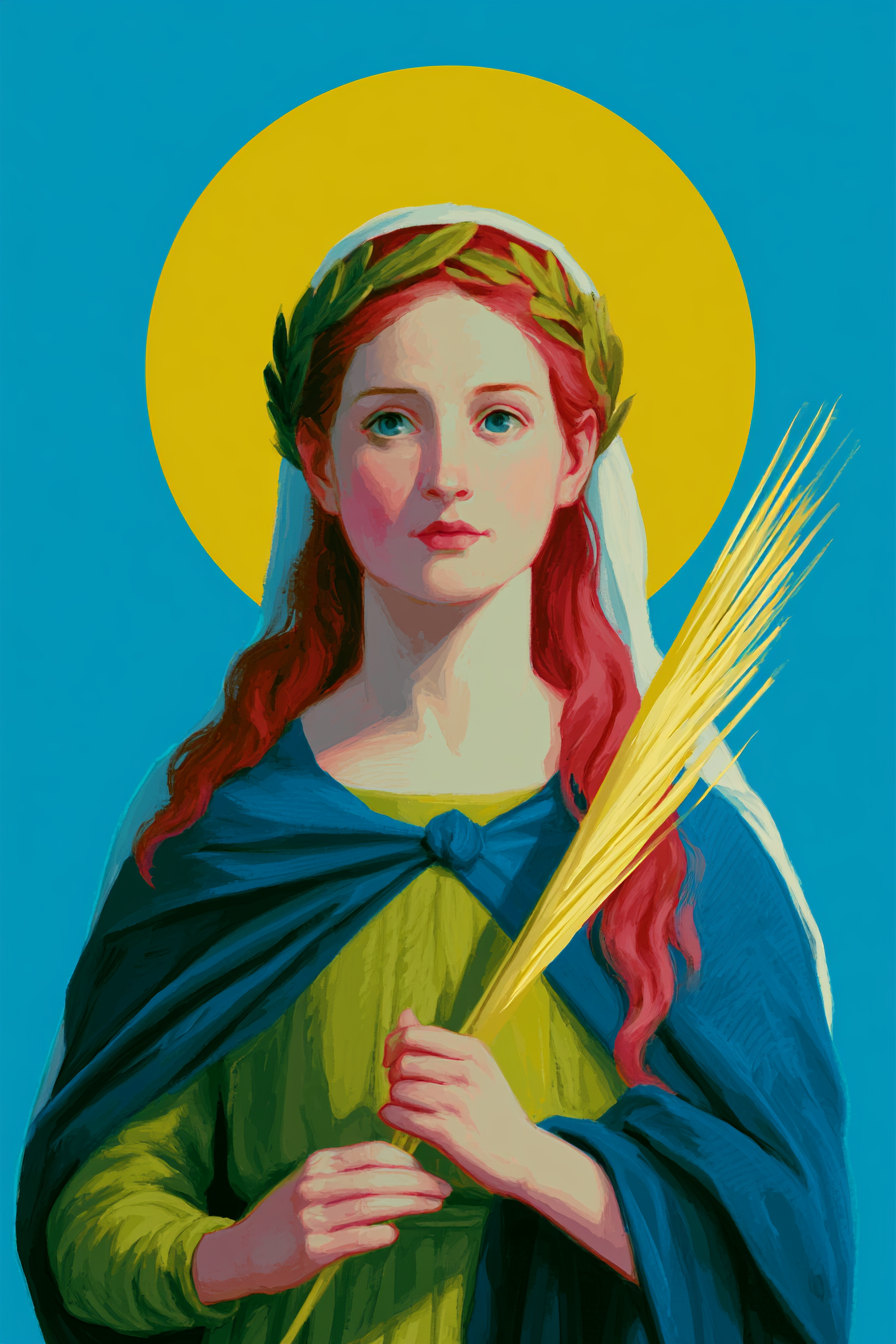
- EyesRepresents St. Lucy's connection to sight and her intercession for the blind.
- CandleSymbolizes her name, meaning 'light,' and the hope she brings during darkness.
- PalmA common symbol of martyrs, representing her sacrifice for her faith.
- SwordOften depicted with a sword, signifying the violent manner of her martyrdom.
- Laurel wreathA symbol of victory, representing her triumph in faith over adversity.
Pray with this saint
Holy Lucy, we turn to you in faith and seek your intercession. Guide us to be steadfast in our commitments and illuminate our paths with your light. Help us to see the truth and to trust in God's plan for our lives, especially in times of suffering and challenges.
For your household
Incorporating St. Lucy into your family's life can deepen your faith and offer a unique opportunity for discussions about bravery and commitment to God. On her feast day, families can light candles to symbolize her name and discuss the importance of light in overcoming darkness, both physically and spiritually. Sharing stories of her life and martyrdom can inspire children to understand the importance of standing up for their beliefs.
You might also encourage children to write letters or prayers to St. Lucy, asking for her intercession in their struggles or when facing challenges in school or friendships. Some families choose to celebrate her feast with special meals, perhaps involving a dish featuring bread or pastries shaped like her eyes, emphasizing her role as the patron saint of the blind. Engaging in these traditions not only honors St. Lucy but also strengthens family bonds through shared faith practices.
Pray as a household
Carry your family in prayer
Solua gives your family a simple, faithful rhythm of prayer — one unhurried moment at a time, for the people you carry by name.
Begin