St. Padre Pio
Padre Pio of Pietrelcina bore the five wounds of Christ for fifty years. Millions came to his confessional. He was canonized by St. John Paul II in 2002. "Pray, hope, and don't worry."
- Feast day
- Sep 23
- Known as
- Mystic · Religious
- Era
- modern
Who they were
Born on May 25, 1887, in the small village of Pietrelcina, Italy, Francesco Forgione, whom the world would come to know as Padre Pio, was the son of Grazio and Maria Forgione. His family, steeped in a humble agrarian lifestyle, labored as farmers, often struggling to make ends meet. Pietrelcina, nestled among picturesque hills and fertile lands of the Campania region, was a serene setting yet marked by the austere realities of early 20th-century Italy—a time when life was often defined by poverty and the pressing struggles of rural existence.
From a young age, Francesco exhibited a profound spirituality that would shape the course of his life. His family was devoutly Catholic, and he grew up surrounded by an atmosphere of faith and piety. As a child, he was captivated by stories of saints and the rituals of the Church. By the age of five, he was already receiving First Communion, an experience that sparked a deep commitment to a life rooted in God. Francesco frequently engaged in prayer, often retreating to his room to spend hours in contemplation.
Being the third of eight children, Francesco was accustomed to the camaraderie of a bustling household. His parents instilled in him the values of kindness and humility, teaching him to care for others. It was during these formative years that he began to feel an unusual presence, drawing him closer to the divine. He often spoke of seeing angels and even claimed to have had visions of Jesus and the Virgin Mary, experiences that he shared only with those closest to him due to their extraordinary nature.
Francesco's education began at a local school, where he pursued his studies with diligence. However, his learning extended beyond the classroom; he was particularly intrigued by spiritual matters, often asking questions that reflected a deep yearning to understand the mysteries of faith. At the tender age of 10, he sensed a calling to the priesthood, a desire that grew stronger as he matured. Recognizing his commitment, his family encouraged him, even as they faced great financial strains.
In 1899, Francesco began to study for the priesthood at the Capuchin friary in Morcone, a choice that would profoundly shape his future. The transition was daunting for the young boy, who left his family for the first time. Yet, it was within the walls of the friary that he blossomed spiritually. He immersed himself in his studies, eager to embrace a life dedicated to service and the pursuit of holiness. His teachers recognized his potential and nurtured his developing spirituality, instilling in him the importance of prayer and devotion.
During these formative years within the friary, Francesco began to experience intense moments of spiritual struggle. He faced bouts of illness, including a serious illness in 1903 that left him bedridden for several months. During this time of suffering, he deeply connected with the passion of Christ, which only heightened his desire to be a part of the larger narrative of salvation. This period marked the beginning of his mystical experiences and encounters with divine grace, solidifying his sense of purpose and commitment to the faith.
In 1907, at the age of 20, he was ordained a priest, taking the name Pio in honor of Pope Pius I. The solemn beauty of the ordination ceremony was a moment of unparalleled joy and a fulfillment of his lifelong dream. Yet, shortly after his ordination, he faced ongoing health challenges, including chronic illness that would be a recurring theme throughout his life. Despite these physical struggles, Father Pio dedicated himself to the ministry, serving his parish and supporting his community with unwavering dedication.
As he began to celebrate Mass and offer the sacraments to his flock, signs of his remarkable spiritual gifts began to emerge. Reports of his profound sermons, ability to read souls, and the miraculous effects of his ministry spread throughout the region. People traveled from far and wide to seek his counsel, finding comfort in his compassionate presence. The whispers of his holiness began to circulate, establishing him as a figure of spiritual authority even in the early days of his priesthood.
Through his journey of faith and the various challenges he faced, the foundation for what would become a life of miraculous events was firmly laid. The world around Padre Pio was on the brink of significant change as the early 20th century unfolded, but within the quiet yet vibrant community of Pietrelcina, a young priest was quietly preparing for a singular vocation that would one day impact millions. His deep spirituality, profound experiences, and relentless dedication to the sacrificial love of Christ set the stage for a remarkable legacy that would resonate through generations.
In 1903, while still a teenager, Francesco Forgione, later known as Padre Pio, entered the Capuchin friary in Morcone, Italy, seeking a life dedicated to God. His decision came in response to a profound spiritual calling that had been nurturing within him since childhood. On January 22, 1903, at the age of 15, he donned the habit of the Capuchins, embracing a path of poverty, chastity, and obedience. His family, though initially reluctant, supported him wholeheartedly, understanding that their son was destined for a life of deep faith and service.
Inspired by the example of Saint Francis of Assisi, Padre Pio exhibited exceptional piety and remarkable spiritual experiences, including visions and mystical encounters. After years of rigorous formation, he was ordained a priest on August 10, 1910, in Benevento. The ordination marked a pivotal moment in his life; it ignited his ministry, beginning a journey that would intertwine with countless souls seeking healing, consolation, and intercession.
Shortly after his ordination, Padre Pio returned to his home town of Pietrelcina. His initial years as a priest were marked by austerity and devotion, but it was during this time that the extraordinary manifestations of his sanctity began to surface. On September 20, 1918, while praying before a crucifix, he received the stigmata—the wounds of Christ—experiencing them as both an immense blessing and a heavy burden. This miraculous occurrence would become a defining aspect of his identity and ministry, drawing people to him in unprecedented numbers.
As the years progressed, Padre Pio became known for his deep compassion and pastoral care. His confessional became a haven for the faithful, as individuals traveled from near and far, awaiting the chance to receive his wisdom and guidance. Between the 1920s and 1960s, thousands flocked to the Sanctuary of San Giovanni Rotondo, where he ministered after being assigned there in 1916. His profound dedication to hearing confessions was tireless; he spent up to 16 hours a day in the confessional, often going without meals.
During World War II, his presence offered hope and comfort to those suffering from the turmoil of the conflict. Many soldiers would come seeking his blessing before heading to the front lines, and countless veterans returned to express gratitude for his intercession during perilous times. The town embraced him not just as a priest, but as a beacon of courage and faith in uncertain times.
Padre Pio also dedicated himself to the care of the sick. He believed that physical ailments often carried spiritual significance and addressed the needs of those around him with compassion. In 1956, he established the Home for the Relief of Suffering, a hospital in San Giovanni Rotondo aimed at providing quality medical care, particularly for the poor. His vision of combining spiritual and physical healing was revolutionary for the time and served as a testament to his empathetic mission.
Throughout these years, Padre Pio faced scrutiny from ecclesiastical authorities. The Church, concerned about the authenticity of his mystical experiences, subjected him to periods of investigation that sometimes limited his public ministry. Despite this, he maintained unwavering faith, encouraging his followers with the phrase, “Pray, hope, and don't worry.” This simple yet profound message resonated with countless others, instilling a sense of peace and trust in God’s divine providence.
As the 1960s approached, Padre Pio's health began to decline, yet his spirit remained steadfast. His fervent prayers continued, touching lives around the globe, and as his reputation grew, so did the devotion of his followers. On September 23, 1968, at the age of 81, he passed from this world, having fought the good fight of faith and leaving behind a lasting legacy of love and devotion.
In the years following his death, the account of his life and his extraordinary works became widely known. Thousands of people claimed to have experienced miracles attributed to his intercession. His canonization on June 16, 2002, by Pope John Paul II affirmed not only his sanctity but also the profound impact he had on the lives of many. Today, he continues to inspire and nurture the spiritual lives of the faithful, his journey of unwavering faith remaining a guiding light for those seeking closeness with Christ.
Padre Pio experienced a life marked by profound trials and exceptional spiritual gifts that shaped his holiness and drew countless souls to him. Born Francesco Forgione on May 25, 1887, in Pietrelcina, Italy, he was introduced to a life of faith from a young age. His parents nurtured in him a deep love for God, but this wasn’t without its challenges. As a child, he often battled poor health, enduring persistent ailments that would follow him into adulthood.
His entrance into the Capuchin order in 1903 at the tender age of 15 brought both spiritual joy and greater responsibility. It was during this time, particularly after he was ordained a priest in 1910, that he began to experience remarkable mystical gifts. Yet these blessings came amid a backdrop of suffering. Shortly after his ordination, Padre Pio was afflicted with severe health issues, which included a debilitating case of tuberculosis. His body bore the marks of his spiritual battles, particularly intense pain in his hands, feet, and side, foreshadowing the stigmata that appeared in 1918—a visible sign of his mystical union with Christ’s Passion.
The public and spiritual scrutiny that followed him was both a gift and a burden. Many sought him for healing and guidance; some, however, harbored skepticism towards his experiences. Despite doubts from both the faithful and the Church hierarchy, Padre Pio remained steadfast, embracing the criticisms with profound humility. His ability to read hearts during confession and his instances of miraculous healings only intensified both devotion and skepticism. Nonetheless, he was unfazed, famously saying, "Some people have a hard heart, and there is no food in the house; I have a hard head, and there is no food in my heart."
Padre Pio’s life was a mosaic of mystical experiences—one particularly poignant event was his ability to bilocate, which drew many testimonies from those who claimed he appeared to them in different locations simultaneously. A miracle of the utmost significance was reported by a woman who claimed that when she visited him in San Giovanni Rotondo seeking healing, her son, who was paralyzed for years, regained mobility through Padre Pio's intercession. These accounts spread far and wide, amplifying his reputation as a significant mystic.
His life of prayer became a beacon for others, a practice he encouraged with his well-known exhortation: “Pray, hope, and don't worry.” Through his own suffering, he exemplified the virtues of patience and trust in God. The prayer he prayed daily, the Rosary, intertwined his life with the events of salvation history, gradually transforming his pain into a profound spiritual joy that resonated with those he encountered. Each confession witnessed countless individuals achieving new levels of spiritual awakening and reconciliation, revealing the grace that flowed from his having embraced the trials given to him.
Padre Pio also faced spiritual warfare—the constant battle against temptation, doubt, and despair, which he openly shared with those who sought his counsel. He exemplified perseverance and deep faith, reminding his spiritual children that trials were a means to grow closer to God. “The Lord is near,” he comforted many, developing a reputation for being both a father and a guide.
His love for the Eucharist was unparalleled; he often spent hours in adoration, willing to offer his life for the sins of others. His Masses were filled with an intense, palpable holiness, and those who attended would often leave transformed, sensing an otherworldly atmosphere. The solemnity with which he celebrated the Eucharist became a touchstone for many, as they witnessed his reverence and devotion to Jesus in the Sacrament.
As his reputation spread, so too did the challenges he faced, culminating in his exile from public ministry for about a decade, imposed by Church authorities concerned over the reactions to his gifts. Instead of being a deterrent, this period became a crucible in which his faith deepened. "I suffer more for the hearts of others than for myself," he often expressed, turning his isolation into a means of intercession for the world.
Despite the trials, persecution, and the weight of his burdens, Padre Pio’s life remains a vivid testament to the power of suffering transformed into love. His reliance on prayer and the sacramental life created a spiritual legacy that continues to resonate, inspiring millions to seek holiness through Christ. His earthly journey concluded on September 23, 1968, yet his spirit and teachings endure, inviting others into a deeper relationship with God through prayer, the sacraments, and the embrace of life’s hardships.
In the final years of Padre Pio's life, he continued to be a beacon of hope and spiritual guidance for countless souls. Living in the serene surroundings of the Capuchin friary in San Giovanni Rotondo, he dedicated himself to prayer, the sacraments, and the care of the many pilgrims who flocked to him. Despite his ailing health, he remained a steadfast presence. His stigmata, the wounds of Christ, which he had borne since 1918, became both a source of immense suffering and profound sanctity, as he offered his pain for the salvation of souls.
Padre Pio's days were often filled with long hours spent in the confessional, where he offered counsel and the sacrament of reconciliation with a unique depth that drew thousands. His ability to read hearts—knowing sins and secrets without prior confession—further established his reputation for holiness. People of all backgrounds came to seek his advice, comfort, and prayers, leaving transformed by the encounter. The friary became a center of pilgrimage, with many looking for miraculous healings and spiritual revival.
On September 23, 1968, the world lost a truly remarkable figure when Padre Pio passed away at the age of 81. His last words, "I see two mothers," echoed the deep faith that had characterized his life. His death reverberated throughout the Catholic Church, and the news spread quickly, igniting a wave of mourning among those who had come to know and love him. His funeral service was attended by thousands, underscoring the impact he had made during his lifetime.
The legacy of Padre Pio began almost immediately after his death. In 1983, merely fifteen years later, the process for his beatification was initiated. Many reported miracles attributed to his intercession during this period, fueling a growing belief in his sanctity. Among those miracles was the healing of a cancerous tumor in a woman who credited her recovery to the prayers of Padre Pio. These events, coupled with testimonies of his deep faith and profound spirituality, prompted the Vatican to accelerate the process.
On May 2, 1999, Pope John Paul II beatified Padre Pio, declaring him "Blessed," an honor that was welcomed with great joy by his followers worldwide. During the beatification ceremony, the Pope highlighted Padre Pio's unwavering commitment to prayer and the sacrament of reconciliation, emphasizing the relevance of his life in the modern world.
Two years later, on June 16, 2002, the Church solemnly canonized him, proclaiming him a saint in a grand ceremony attended by thousands of pilgrims who had come to pay their respects. Pope John Paul II praised St. Padre Pio for his life of prayer, sacrifice, and his unwavering faith. The canonization served not only as a recognition of his holiness but also as a reaffirmation of the spiritual truths that he had lived and preached.
Today, St. Padre Pio is revered as a powerful intercessor. His enduring influence is felt among the faithful, and he is the patron saint of civil aggregates, the unborn, and those who are suffering. His words, "Pray, hope, and don't worry," resonate deeply in the hearts of millions, reminding them to trust in God’s providence amid life’s difficulties. More than just a saint of the past, Padre Pio continues to inspire new generations through various avenues, including books about his life, documentaries, and retreats dedicated to his teachings.
Devotion to St. Padre Pio has transcended geographical boundaries, expressed through novenas, prayer groups, and celebrations on his feast day, September 23. His relics, along with the countless stories of miracles attributed to him, are a source of encouragement and solace for the faithful. Churches and shrines dedicated to him have sprung up worldwide, further testifying to the profound impact he has had on the Church and individual lives.
In myriad ways, St. Padre Pio leads people closer to Christ, guiding them through the challenges of modern life with a message of hope and unwavering faith. His legacy is not just in the miracles recounted by those who sought his intercession but in the many lives transformed by the simple yet profound teachings he imparted throughout his life. His example challenges the faithful to embrace a life of prayer, penance, and compassion, making him a deeply cherished figure in the history of the Church.
Remembered for
St. Padre Pio is most remembered for his extraordinary spiritual gifts, including the stigmata, which he bore for fifty years, mirroring the wounds of Christ. Known for his deep devotion to prayer and the Sacraments, he became a spiritual father to many, guiding them through the confessional with compassion and insight.
His miraculous life drew millions to seek his counsel and intercession. Canonized by St. John Paul II in 2002, Padre Pio's message of hope and trust in God continues to resonate today. His famous admonition, "Pray, hope, and don't worry," captures the essence of his faith-filled life and is a reassuring reminder for the faithful in times of uncertainty.
Sep 23
How to recognize them
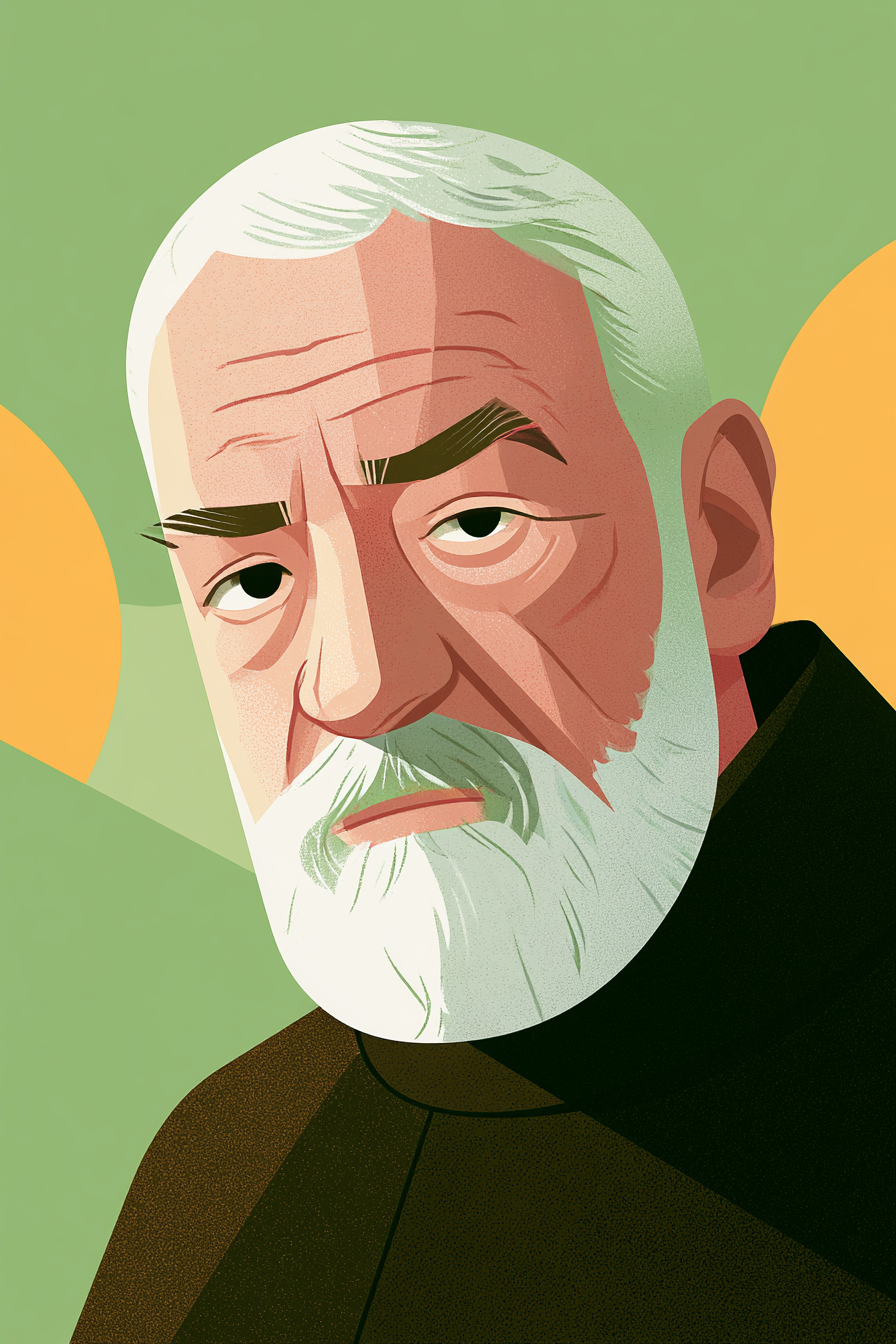
- StigmataThe five wounds of Christ manifested on Padre Pio's body.
- ConfessionalRepresenting his role as a confessor to countless souls seeking forgiveness.
- RosarySymbolizing his devotion to prayer and the Blessed Virgin Mary.
- Capuchin HabitThe religious garb he wore as a member of the Capuchin Franciscan Order.
- CrucifixReflecting his deep association with the passion and suffering of Christ.
Pray, hope, and don't worry. Worry is useless. God is merciful and will hear your prayer.
Padre Pio FoundationPray with this saint
Holy Padre Pio, we turn to you in faith and seek your intercession. Help us to embrace our trials with a spirit of hope, understanding that our struggles can bring us closer to Christ. As we navigate our daily lives, may we remember your words and live in unwavering trust, inspiring us to pray, hope, and not worry.
For your household
Integrating St. Padre Pio into your family life can be both enriching and spiritually fulfilling. Begin by sharing his life story with your children, emphasizing his profound experiences in the confessional and his powerful connection to God. Discuss how he bore the wounds of Christ and how this emphasizes the importance of offering our sufferings to God in unity with Jesus' sacrifice. You can create a special family prayer time on his feast day, September 23, where you ask for his intercession and reflect on his teachings about prayer and hope.
Encourage your family to establish a tradition of praying to St. Padre Pio during challenging times. This could be done by writing down struggles or worries and placing them on a small altar dedicated to him, where you can also have his picture or statue. This act serves as a tangible reminder of his presence and intercession, helping family members feel supported in their struggles. You might also encourage your children to come to you with their own worries and fears, creating a space for open discussions about how faith can guide them through tough times.
Consider incorporating a special meal on St. Padre Pio’s feast day, perhaps preparing a dish that reflects Italian culture, honoring his heritage. As your family shares this meal, tell stories of his life and miracles, sparking conversations about the power of faith and prayer. Invite your children to think about how they can live out St. Padre Pio's message of love and self-sacrifice in their daily lives.
Encourage acts of kindness and service as a family, reflecting St. Padre Pio’s belief in helping others. This could involve volunteering together at a local charity or finding small but meaningful ways to assist neighbors or friends in need. Discussing these experiences together can help your family understand the impact of love and compassion in action, both in their community and their faith journey.
In moments of suffering or difficulty, remind your family of St. Padre Pio’s wisdom: to pray, to hope, and not to worry. By doing so, you not only honor this saint but also strengthen the bonds of your family through a shared commitment to faith and prayerfulness, fostering resilience and a deeper trust in God's love.
Pray as a household
Carry your family in prayer
Solua gives your family a simple, faithful rhythm of prayer — one unhurried moment at a time, for the people you carry by name.
Begin