
St. Paul the Apostle
Paul was the Church's greatest persecutor until the risen Christ appeared to him on the road to Damascus. Transformed, he became its greatest missionary — writing half the New Testament.
- Feast day
- Jun 29
- Known as
- Martyr · Apostle
- Era
- apostolic
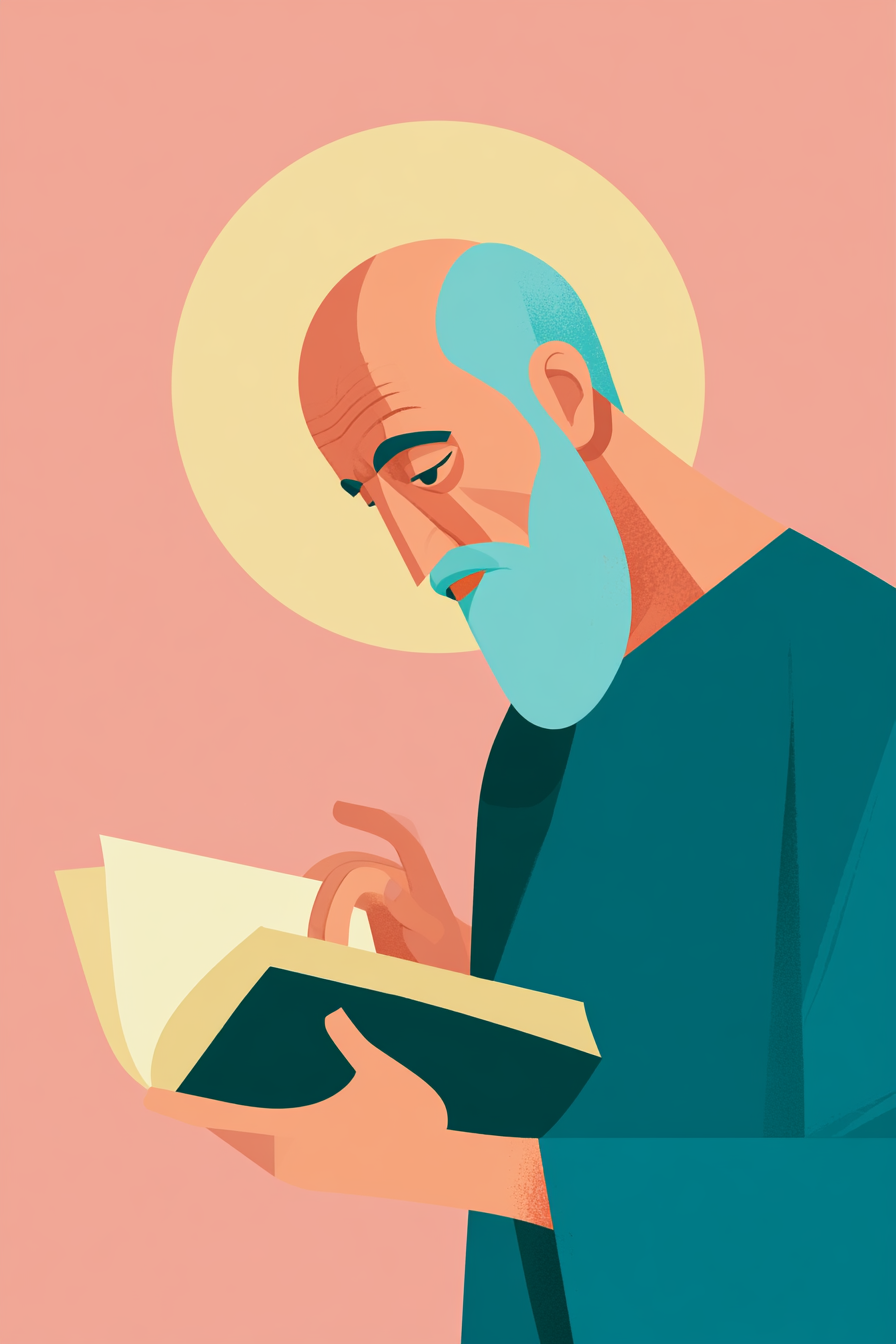
Who they were
Born around the year 5 A.D. in Tarsus, a city in present-day Turkey, Paul, originally named Saul, was a devout Jew and a Roman citizen. His early life was steeped in the Jewish traditions, and he became a Pharisee, well-versed in the law and zealous in his faith. Saul was fervently opposed to the nascent Christian movement, viewing it as a dangerous sect that threatened Judaism. He zealously persecuted Christians, approving the death of St. Stephen, the first martyr, and actively searching for others to imprison and punish.
Everything changed on the road to Damascus, around the year 33 A.D. As Saul journeyed, intent on capturing Christians, a brilliant light suddenly surrounded him, and he fell to the ground. He heard a voice ask, "Saul, Saul, why are you persecuting me?" This transformative encounter with the risen Christ left him blind for three days. During this time, Ananias, a disciple from Damascus, was instructed by God to restore Saul’s sight and bring him to the faith. Following his recovery, Saul was baptized and began his radical transformation into Paul, the Apostle.
Paul's zeal for Christ was unmatched after his conversion. He embarked on several missionary journeys throughout the Mediterranean, spreading the Gospel to both Jews and Gentiles. Key cities such as Corinth, Ephesus, and Philippi became places of foundational Christian communities due to his efforts. Through his letters, or epistles, which addressed various issues facing these early Christians, Paul provided theological guidance, encouragement, and teachings that clarified the nature of Jesus Christ and the significance of the resurrection. Most of the letters he wrote, which include Romans, Galatians, and Corinthians, are now integral parts of the New Testament.
Despite facing immense opposition and suffering, including imprisonment, beatings, and shipwrecks, Paul remained steadfast in his mission. He never ceased to share the message of salvation through Christ, often finding strength through prayer and community. His writings reflect profound insights into the nature of faith, grace, and love, shaping Christian doctrine for centuries.
Paul's life culminated in martyrdom around 64 A.D. in Rome during the persecution of Christians under Emperor Nero. Tradition holds that he was decapitated, symbolizing both his Roman citizenship and his ultimate sacrifice for spreading the Gospel. His legacy as a missionary and theologian continues to influence Christians worldwide.
Through his unwavering faith and spirited commitment to evangelization, St. Paul serves as a model for all Christians. His conversion story emphasizes the transformative power of grace and the validity of faith, inspiring believers to share the message of Christ boldly and lovingly. He is often called the apostle to the Gentiles, reminding us that the love of God knows no boundaries.
Remembered for
St. Paul the Apostle is remembered for his dramatic conversion experience on the road to Damascus, where he transformed from the Church's fiercest persecutor into one of its most passionate advocates. This pivotal moment not only changed his life but also significantly contributed to the spread of Christianity throughout the Roman Empire. His missionary journeys, during which he established numerous Christian communities, marked the beginning of a new era in the Church's history.
Jun 29
How to recognize them
- SwordRepresents his martyrdom, as he was beheaded for his faith.
- BookSymbolizes his extensive writings which form a significant part of the New Testament.
- Olive branchSignifies peace, reflecting his mission to unite diverse communities in Christ.
I can do all things through Christ who strengthens me.
Philippians 4:13, New King James VersionPray with this saint
Holy Paul, intercede for us that we may remain steadfast in our faith, just as you boldly proclaimed the Gospel in every trial. Help us to embrace the transformation Christ calls us to, and to spread His love and hope to others with courage and zeal.
For your household
Integrating St. Paul into family life can be a meaningful way to inspire conversations about faith and perseverance. Consider sharing stories of his missionary journeys during family prayer time, encouraging children to think about how they can spread kindness and faith in their own lives. Each year on his feast day, families can gather to reflect on his letters in the New Testament, discussing their relevance and how they apply to daily life.
Another wonderful tradition is to adopt his virtues, such as resilience and commitment to the faith. Families might choose to volunteer together in their local community, emulating St. Paul’s dedication to spreading Christ's love. Additionally, parents can encourage children to learn about the places Paul visited and the people he helped, igniting their interest in Church history and missionary work. Naming a child after St. Paul can also be a special way to carry his legacy forward, allowing the family to celebrate their child's name day annually with special prayers and festivities to honor this great apostle.
Pray as a household
Carry your family in prayer
Solua gives your family a simple, faithful rhythm of prayer — one unhurried moment at a time, for the people you carry by name.
Begin