
Peter
St. Peter was one of Jesus' closest disciples and the first Pope of the Catholic Church. Known for his strong faith and leadership, he became a foundational figure in Christianity, ultimately giving his life for his beliefs.
- Feast day
- Jun 29
- Known as
- Apostle · Pope · Martyr
- Era
- 1st-century Judea
Who they were
St. Peter, originally named Simon, was born in Bethsaida, a fishing village on the shores of the Sea of Galilee, around the beginning of the first century. He worked as a fisherman alongside his brother Andrew, who would later introduce him to Jesus. The moment of transformation came when Jesus called Simon to be a "fisher of men." This pivotal encounter marked the beginning of a profound journey with Christ that would see Simon, renamed Peter, become one of the most influential figures in Christianity.
Peter was part of Jesus' inner circle, witnessing significant events in Christ's ministry, such as the Transfiguration and the Agony in the Garden. His passionate and sometimes impulsive nature often shone through, most notably when he declared that Jesus was the Messiah — a moment affirmed by Jesus, who responded, “You are Peter, and on this rock, I will build my Church.” This declaration established Peter as a foundational leader of the early Church, entrusted with the responsibility of guiding the faithful.
Despite his strong faith, Peter faced significant challenges, including fear and doubt. He famously denied knowing Jesus three times during the Passion but was later restored by Christ after the Resurrection. This moment is poignant in Peter's life, highlighting themes of forgiveness and redemption. In response to Jesus' question, “Do you love me?” Peter affirmed his love three times, symbolically countering his earlier denials and reinstating his role as a primary shepherd for the new Christian community.
After the Ascension of Jesus, Peter took on a leading role in the early Church in Jerusalem. He preached boldly, performed miracles, and played a crucial role in resolving disputes among the early Christians. His apostolic mission extended beyond Jerusalem; he traveled to various regions, spreading the Gospel and founding communities of believers. His leadership was marked by both triumphs in spreading the word and challenges, including conflicts with Jewish authorities and persecution from Roman powers.
Tradition holds that Peter eventually traveled to Rome, where he continued his ministry. Following years of evangelization, he faced martyrdom under Emperor Nero around AD 64. According to tradition, Peter was crucified upside down at his own request, believing himself unworthy to die in the same manner as Christ. His death solidified his status as the first Pope and martyr, a symbol of unwavering faith and leadership.
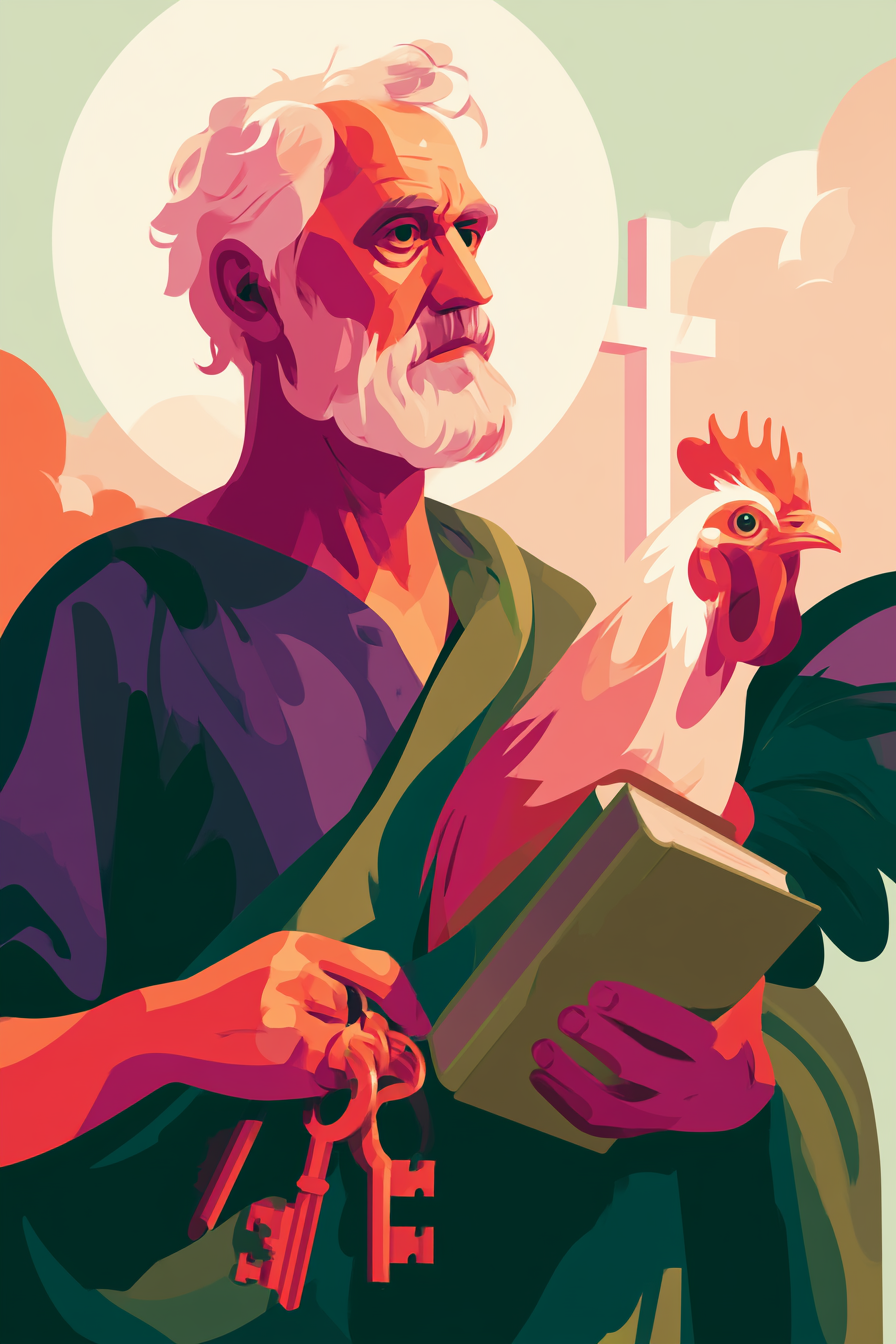
Peter’s legacy endures through his teachings, his role in establishing the early Church, and his martyrdom. He is often portrayed as the figure who holds the keys to the Kingdom of Heaven, a symbol of his leadership and authority bestowed by Christ. The Catholic Church venerates him not only as the first Pope but also as a steadfast intercessor for all believers. His life exemplifies a journey of faith marked by profound devotion, testimony, and ultimately, sacrifice for the sake of the Gospel. Through his example, St. Peter inspires countless individuals to embrace their faith courageously and steadfastly.
Remembered for
St. Peter is known for his role as the chief apostle and first Pope, a leader who guided the early Church with steadfast faith. He is particularly remembered for his bold proclamation of faith in Jesus as the Messiah, often serving as an example of repentance and forgiveness after his denial of Christ, which showcases God’s mercy.
His numerous miracles, including healing the sick and raising the dead, are celebrated as signs of God’s power working through him. Additionally, St. Peter’s letters in the New Testament provide guidance and encouragement, emphasizing the importance of faith, hope, and love in the Christian life. His martyrdom in Rome further solidifies his legacy, as he chose to die rather than renounce his faith, becoming a symbol of courage and commitment for generations of Christians.
Jun 29
How to recognize them
- keysRepresents the keys to heaven given to Peter by Jesus
- fishSymbolizes Peter's former life as a fisherman and his call to be a "fisher of men"
- roosterReminds of Peter's denial and subsequent repentance after the rooster crowed
- bookSignifies his role in teaching and spreading the Gospel as the first Pope
- crossRepresents his martyrdom and commitment to Christ unto death
Lord, you know all things; you know that I love you.
John 21:17, New International VersionPray with this saint
Holy Peter, guide us in our journey of faith and help us to be courageous like you in proclaiming God's love. Strengthen our hearts and lead us to serve our families and communities with unwavering dedication. Amen.
For your household
St. Peter holds a special place in the heart of Catholic families, offering a profound example of faith and leadership. Families can integrate St. Peter into their lives by encouraging children to learn about his journey as a disciple of Christ and the role he played as the first Pope. This can be through family discussions, reading the Scriptures that recount his life, particularly in the Gospels, and sharing stories of his steadfastness in faith despite challenges.
A beautiful way to honor St. Peter is to celebrate his feast day on June 2. Families might consider preparing a special meal together, perhaps including fish to symbolize Peter's life as a fisherman. Prayer can be central to this celebration; families can gather to ask for St. Peter’s intercession, expressing their own hopes and challenges in their faith journey.
In cultivating a deeper understanding of St. Peter, parents can engage their children in conversations about the importance of standing firm in one's beliefs, even in difficult circumstances. This can open opportunities to discuss contemporary issues of faith and morality, guiding children to navigate their own paths with the same courage St. Peter exemplified.
To further connect with St. Peter, families can adopt a simple daily prayer routine, perhaps invoking his intercession each morning. "St. Peter, help us to follow Jesus with the same faith and courage you showed." This reinforces St. Peter as a guardian and model for children, highlighting the values of trust and dedication to Jesus that he embodied.
Finally, families might consider naming children after St. Peter or encouraging them to choose "Peter" as a confirmation name, linking these moments of personal growth and faith to the legacy of one of Christianity's greatest figures. Such practices can enrich a family’s understanding of their faith while nurturing a connection with a foundational saint like St. Peter.
Pray as a household
Carry your family in prayer
Solua gives your family a simple, faithful rhythm of prayer — one unhurried moment at a time, for the people you carry by name.
Begin