
St. Peter the Apostle
Peter the fisherman was chosen by Christ to lead the Church. He denied Jesus three times — and was forgiven three times. He was crucified upside down in Rome, refusing to be crucified as his Lord.
- Feast day
- Jun 29
- Known as
- Martyr · Apostle · Pope
- Era
- apostolic
Who they were
St. Peter the Apostle, originally named Simon, was born in Bethsaida and worked as a fisherman alongside his brother, Andrew. When Jesus called him to be a disciple, Peter left his fishing nets behind and devoted himself to following the Lord. He was one of the first to recognize and proclaim Jesus as the Messiah, receiving the name "Peter," which means "rock," signifying his pivotal role in the early Church.
Peter's life was marked by extraordinary moments of faith and profound struggle. He was present during many significant events in Jesus' ministry, including the Transfiguration and the Agony in the Garden. Yet, he also experienced moments of weakness; most notably, he denied knowing Jesus three times during the Passion, overwhelmed by fear. After the Resurrection, however, Jesus restored Peter, asking him three times, "Do you love me?" This redundancy echoed Peter’s earlier denials and affirmed his mission to "Feed my sheep," establishing him as the leader of the apostles.
After the Ascension of Christ, Peter took on a crucial role in the early Christian community in Jerusalem. He preached boldly at Pentecost, leading to the baptism of about three thousand people. His authority was recognized among the apostles, and he played a significant role in the Council of Jerusalem, where key decisions regarding Gentile converts were made.
Peter's ministry was not confined to Judea; he traveled extensively, sharing the Gospel and performing miracles. He is traditionally believed to have brought the Good News to the regions of Samaria and further into the Roman Empire, encountering both acceptance and opposition. Eventually, Peter made his way to Rome, where he would become the leader of the Church there.
The history of his martyrdom is rich with both devotion and legend. According to early Christian tradition, during the persecutions of Emperor Nero, Peter was arrested and sentenced to death. Humbling himself before the thought of dying as his Lord did, he requested to be crucified upside down, a testimony to his deep humility and profound faith. This act of sacrificial love has frames his legacy as a martyr.
Peter's death, believed to have occurred around the year 64 AD, is significant, as it marks the establishment of a lineage that continues in the papacy today. He is venerated as the first Pope and as a symbol of steadfast faith. His letters, 1 and 2 Peter, remain in the New Testament, guiding believers on living out their faith amid trials and temptations.
St. Peter left a lasting legacy as the foundation of the Church and a model of repentance and reconciliation. His life is celebrated for its authenticity, showcasing the divine mercy of Christ that transforms us even through our failures. Today, he is not only a patron saint of fishermen but also a powerful intercessor for all who seek to strengthen their faith and grow in love for Christ.
Remembered for
St. Peter the Apostle is remembered for his vital role as the leader of the early Church, as appointed by Jesus Himself. His journey from a simple fisherman to the first pope showcases his transformation and unwavering faith. Peter is often called the 'rock' upon which Christ built His Church, emphasizing his foundational role in Christianity.
In addition to his leadership, Peter's life was marked by humility and repentance; after denying Jesus three times, he was granted forgiveness and entrusted with the care of Christ's followers. His martyrdom, traditionally depicted as being crucified upside down, illustrates his profound love for Christ, choosing to suffer in a way that reflected his Lord's own sacrifice.
Jun 29
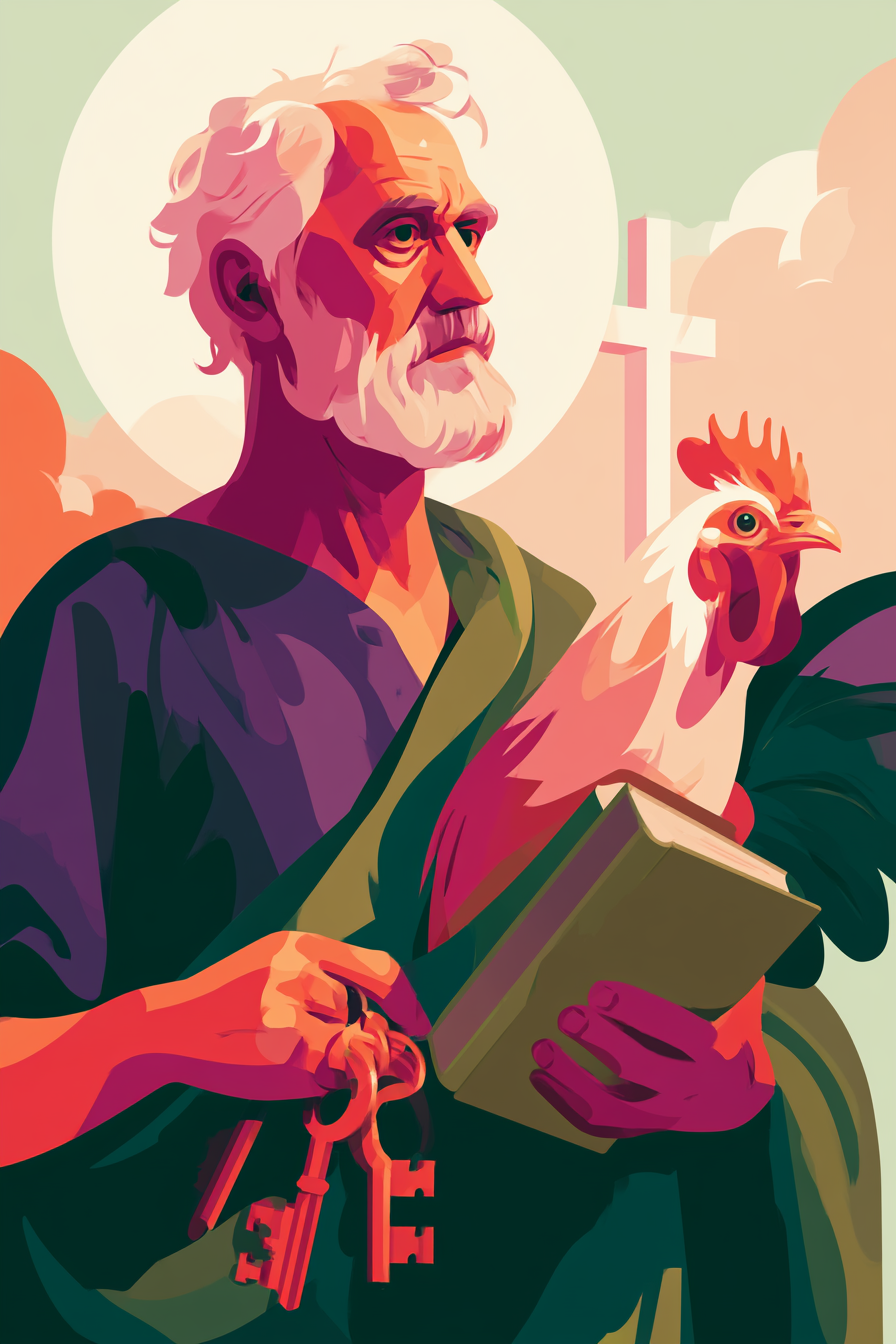
How to recognize them
- KeysSymbolizes the authority given to Peter by Jesus to lead the Church.
- RoosterRepresents Peter's denial of Christ and subsequent repentance.
- FishReflects Peter’s life as a fisherman and his mission to catch souls for Christ.
- RockSignifies Peter's foundational role in the Church, as declared by Jesus.
- CrossRepresents St. Peter's martyrdom and his unwavering faith in Christ.
I hear that you are called Peter; and on this rock I will build my Church.
St. Peter (as recorded in the writings of the early Church Fathers)Pray with this saint
Holy Peter, steadfast leader of the Church, guide us in our faith and help us to follow Christ with the same courage and dedication. Intercede for our families and help us to live each day in service to God and one another.
For your household
Integrating St. Peter the Apostle into your family's life can begin with celebrating his feast day on June 29. Consider creating a special dinner that includes your family's favorite seafood dishes, reflecting Peter's life as a fisherman. This meal can serve as a delightful reminder of his humble beginnings and the call to follow Christ.
Encourage conversations about St. Peter with your children, discussing themes of forgiveness and leadership. You could even share stories of times when they've had to be courageous or forgiving, drawing parallels to Peter's experiences. Praying the 'Our Father' together and asking St. Peter for guidance can help instill a sense of connection with the saint.
For a name-day practice, families can adopt the name Peter or its variants (like Petra for girls) and celebrate. Gifts or small tokens with religious significance can be given, making the celebration meaningful. St. Peter can also be a powerful intercessor during times of struggle or uncertainty, reminding your family that we too can rise from our mistakes and be renewed in faith.
Pray as a household
Carry your family in prayer
Solua gives your family a simple, faithful rhythm of prayer — one unhurried moment at a time, for the people you carry by name.
Begin