
St. Thérèse of Lisieux
Thérèse Martin entered Carmel at fifteen and died at twenty-four, yet her "Little Way" of spiritual childhood transformed Catholic spirituality. She promised to spend her heaven doing good on earth.
- Feast day
- Oct 1
- Known as
- Doctor · Mystic · Religious
- Era
- modern
Who they were
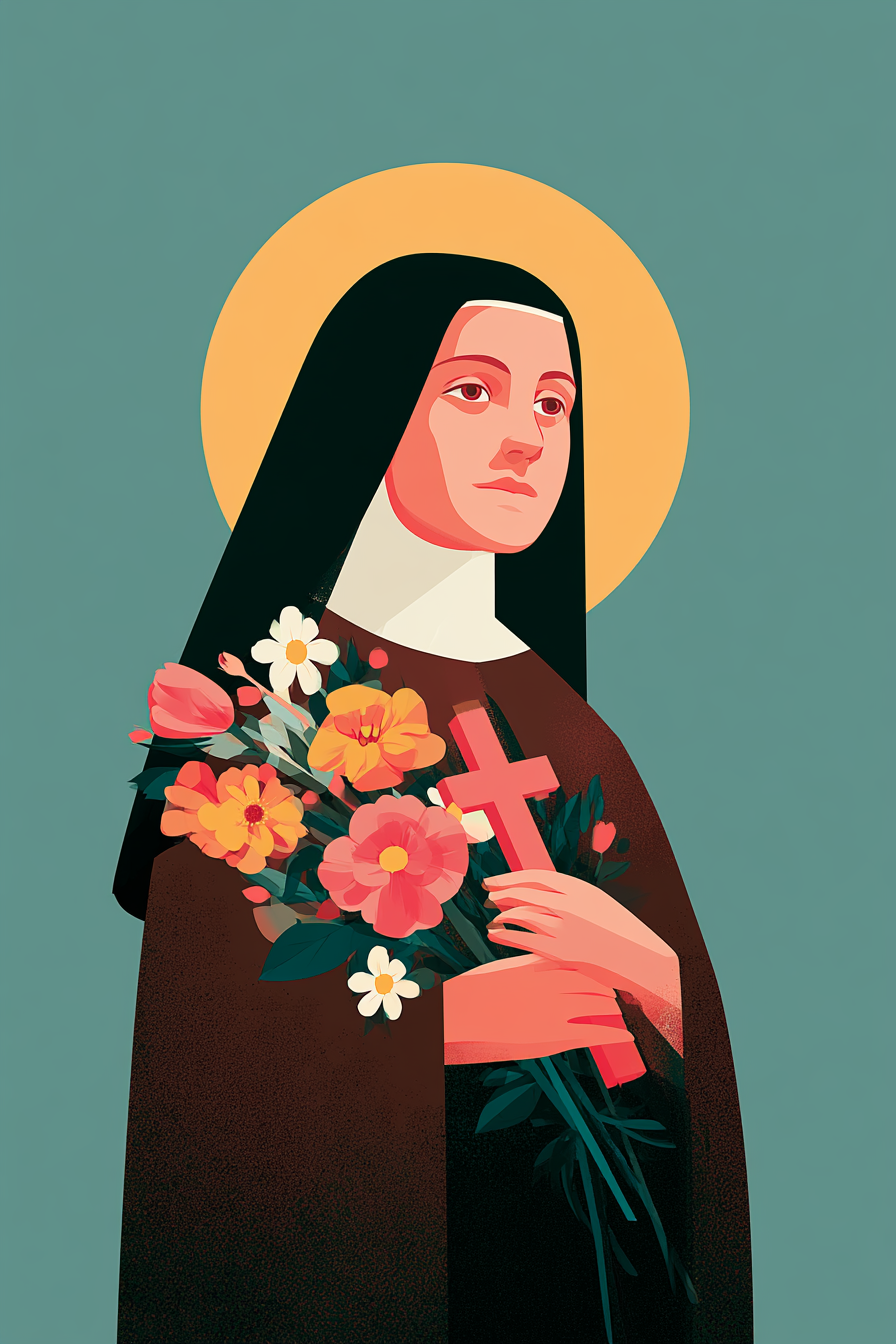
St. Thérèse of Lisieux, also known as "The Little Flower," was born on January 2, 1873, in Alençon, France. The youngest of nine children in a loving family, she lost her mother to cancer when she was just four years old, an event that deeply marked her childhood. Thérèse was a sensitive, imaginative child, often drawn to the spiritual life from a young age. She was particularly inspired by the lives of the saints and nurtured a personal relationship with God.
At the tender age of 15, after a profound spiritual experience during a Christmas Eve service, she requested entrance into the Carmelite convent in Lisieux. Despite her youth, Thérèse faced challenges in her vocation. The strict atmosphere of the convent tested her resolve, yet she remained steadfast in her decision. She took the name Thérèse of the Child Jesus and the Holy Face, signaling her desire to embrace a life of simplicity and love, imitating Jesus with childlike trust.
During her time in the convent, Thérèse cultivated what would later be known as her "Little Way," a spiritual path characterized by humility, simplicity, and a love that impacts the divine. Instead of aspiring to great feats, she emphasized the value of small acts of love done with great devotion. Her writings, particularly her autobiography "Story of a Soul," reflect this philosophy, showcasing her deep spiritual insights and commitment to a life of prayer and love for others.
St. Thérèse faced severe trials during her brief life, including illness and spiritual dryness. From 1896, she suffered with tuberculosis, which caused her immense physical pain yet also deepened her union with Christ. Thérèse’s faith remained strong, and she approached her suffering as a means to unite herself more closely to Jesus’ own passion. She often said she would spend her heaven doing good on earth, interceding for people and helping them toward salvation.
Thérèse died on September 30, 1897, at just 24 years of age, yet her legacy endures. Canonized in 1925 by Pope Pius XI, she was declared a Doctor of the Church in 1997 by Pope John Paul II, making her one of only four women to receive this honor. Her writings and "Little Way" have inspired countless individuals and families, emphasizing the importance of love, simplicity, and trust in God, regardless of the circumstances.
St. Thérèse’s impact is felt globally, as her spirituality resonates deeply within the hearts of many seeking a more profound relationship with God. Her life exemplifies how even the smallest actions, when done with love, can create a significant impact on the world and the Church. Today, her feast day is celebrated on October 1, drawing attention to her humble, yet transformative, spirituality that calls everyone to embrace their own path of holiness through simple acts of love.
Remembered for
Saint Thérèse of Lisieux is best known for her "Little Way," a spiritual approach emphasizing simplicity and childlike trust in God's love. Despite her short life, she has inspired countless people toward a deeper relationship with God through her profound insights on spiritual childhood.
Thérèse entered the Carmelite convent at just fifteen and committed herself to a life of prayer and sacrifice. Her writings, particularly "Story of a Soul," reveal her deep desire to love God and serve others, showing that even small acts of love can have great significance.
She promised to spend her heaven doing good on earth, interceding for those who seek her help. The unique blend of simplicity and profound spirituality in her teachings makes her accessible to believers of all ages, encouraging them to embrace their faith with joy and humility.
Oct 1
How to recognize them
- RoseRepresents love and purity.
- CrucifixSymbolizes her deep devotion to Christ.
- LilySignifies her strong commitment to humility and simplicity.
- Carmelite habitRepresents her religious life and dedication to prayer.
- White butterflyA symbol of her spiritual transformation and innocence.
I want to spend my heaven doing good on earth until the end of the world.
Last ConversationsPray with this saint
Holy Thérèse, beloved flower of Jesus, please intercede for us and help us to adopt your Little Way, trusting completely in God's love and mercy.
For your household
As a family, consider incorporating the spirit of St. Thérèse into your daily life by practicing small acts of kindness and love toward one another. Discuss as a family how even the smallest gestures, like a smile or a helping hand, can reflect God's love and grace.
Encourage each family member to share their experiences of how they can make everyday sacrifices for the sake of love, reminding each other that these small offerings are powerful in the eyes of God. You might start a family tradition of writing down these acts of kindness in a special journal to reflect on what you've done and express gratitude for the little miracles in your lives.
When faced with challenges, remember to pray together for the grace to see God’s hand through it all. St. Thérèse’s example shows us that through love and trust in God, even the smallest of families can have a profound impact on the world.
Pray as a household
Carry your family in prayer
Solua gives your family a simple, faithful rhythm of prayer — one unhurried moment at a time, for the people you carry by name.
Begin