
Blessed Virgin Mary, Queen of Poland
The Blessed Virgin Mary, Queen of Poland, is a revered title of Mary celebrated in Poland. She symbolizes hope, protection, and maternal love for the Polish people.
- Feast day
- May 3
- Known as
- Queen
- Era
- 14th-century Poland
Who they were
The Blessed Virgin Mary, Queen of Poland, holds a special place in the hearts of the Polish people, embodying their faith, resilience, and devotion throughout history. Her veneration in Poland dates back to the late medieval period, particularly associated with the renowned image of Our Lady of Częstochowa, also known as the Black Madonna. This cherished icon, hailing from the Jasna Góra Monastery, has become a national symbol of Polish identity and spirituality.
According to tradition, the icon was brought to Poland by Prince Ladislaus of Opole in the 14th century. The story of the Black Madonna is rich, highlighting not only the artistic beauty of the image but also miraculous events surrounding it. Many believers attribute various miracles to her intercession, including events that have fostered deep national unity and hope, especially in times of hardship.
In the face of invasions and oppression, including during the Swedish Deluge in the 17th century, the Polish people turned to Mary as their protector. In 1656, during a pivotal moment for the country, King Jan Kazimierz vowed to declare her the Queen of Poland if he were granted victory. Following a significant military triumph, he fulfilled this promise, and since then, May 3 has been observed as a feast day in her honor. This date not only commemorates Mary but also coincides with the anniversary of Poland’s first constitution, blending religious and national pride.
Throughout the centuries, devotion to the Blessed Virgin Mary has remained a cornerstone of Polish Catholicism. Pilgrimages to Częstochowa continue to draw countless faithful who seek her intercession and comfort. The feast of Our Lady, Queen of Poland, is marked with solemnity and joy, celebrated with special Masses, processions, and prayers that highlight her role as a guiding figure for families and the nation.
Mary’s maternal love is deeply woven into the fabric of Polish family life, serving as an example of faith, courage, and compassion. The Polish people find in her a source of strength through trials and an intercessor who advocates for their needs. Generations have been raised to honor her, ensuring that her legacy endures in prayers, traditions, and the everyday lives of families.
Through her title as Queen, Mary becomes a symbol of hope and unity, reminding the Polish people of their shared heritage, faith, and commitment to one another and to God. Her influence extends beyond the religious sphere, acting as a beacon of resilience, which continues to inspire Polish identity and culture even in contemporary times. This devotion is often expressed in homes, where families honor her through prayers, novenas, and heartfelt appeals for guidance.
In the broader Christian context, Mary’s significance transcends Poland, as she is honored universally as the Mother of God and a model of discipleship. However, the unique devotion and historical ties to the Blessed Virgin Mary, Queen of Poland, illustrate her vital place in the heart of the Polish nation, fostering an abiding faith in her protective and nurturing embrace.
Remembered for
The Blessed Virgin Mary is honored as the Queen of Poland, symbolizing hope and protection for the Polish people. This title represents her nurturing love and maternal care, a reassurance during times of struggle and uncertainty.
Mary is especially venerated for her intercession, which many believe has brought comfort and miracles to those who turn to her in prayer. Her image in Polish culture is a constant reminder of her presence and assistance in both personal and national trials.
May 3
How to recognize them
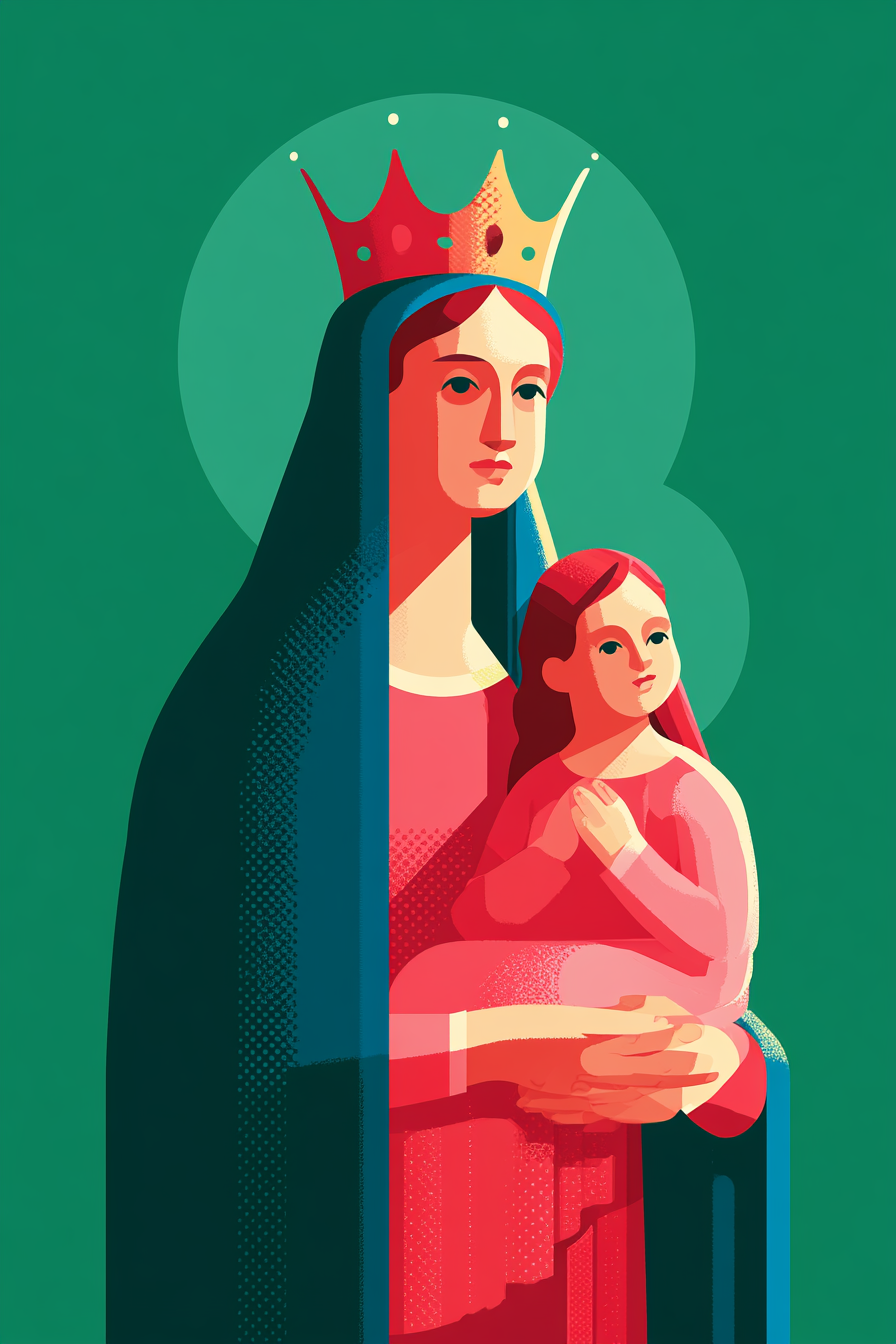
- CrownRepresents her role as Queen and protector of Poland.
- Blue mantleSymbolizes her maternal care and compassion.
- RosaryRepresents prayer and devotion to her intercession.
Pray with this saint
Holy Mary, Queen of Poland, intercede for us and guide our families in love and peace. May we find strength in your example of faith and compassion, especially in times of difficulty.
For your household
Celebrating the Blessed Virgin Mary as Queen of Poland can be a beautiful aspect of family life. Families may start the day with a special prayer asking for her intercession, especially on her feast day, May 3. Remember to gather together for a meal, sharing stories of how Mary has affected your lives or the history of Poland.
Incorporating traditions such as making a special meal or offering flowers to a statue or image of Mary can deepen the family’s connection to her. Discuss her virtues with children, emphasizing her role as a mother and protector. Teach them to turn to her in prayer during tough times—whether it's for guidance, comfort, or strength during personal struggles.
Marking name days can also be a meaningful way to celebrate; anyone named after Mary can have a special celebration, filled with prayers and shared moments of gratitude. By regularly reflecting on Mary’s life and virtues, families can cultivate a spirit of love, protection, and hope in their household, inspired by her example.
Pray as a household
Carry your family in prayer
Solua gives your family a simple, faithful rhythm of prayer — one unhurried moment at a time, for the people you carry by name.
Begin